Why Choose A Dedicated Offshore Development Center
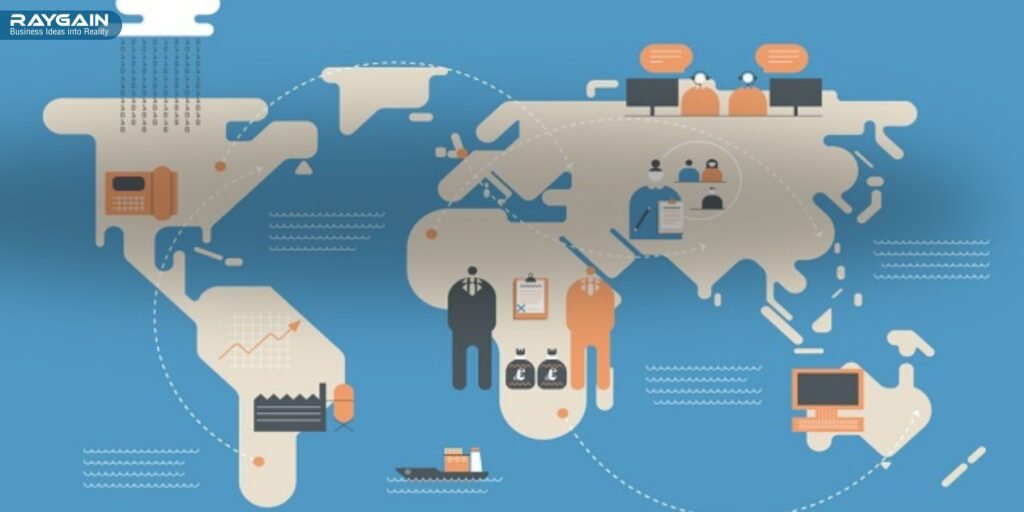
In today’s fast-paced digital landscape, businesses constantly seek ways to stay competitive while optimizing costs and efficiency. A dedicated offshore development center (ODC) has emerged as a strategic solution for companies aiming to scale operations, access global talent, and streamline development processes. But what makes an ODC the right choice for your business? Let’s explore the key benefits and reasons why investing in an offshore development center can be a game-changer. What is a Dedicated Offshore Development Center? A dedicated offshore development center is a remote team of skilled developers, engineers, and IT professionals who work exclusively for a company from an offshore location. It functions as an extension of the in-house team, providing specialized software development, IT services, and technical support. Companies collaborate with offshore teams to cut costs, enhance productivity, and leverage global expertise without the burden of hiring and maintaining an in-house team. Top Reasons to Choose a Dedicated Offshore Development Center 1. Cost-Effective Development One of the primary reasons businesses opt for a dedicated offshore development center is significant cost savings. Offshore locations, such as India and Eastern Europe, offer lower labor costs compared to Western countries. This allows businesses to build high-quality software solutions at a fraction of the cost, without compromising on expertise. 2. Access to a Global Talent Pool Hiring an in-house team limits a company to local talent, whereas an offshore development center provides access to a diverse, highly skilled workforce. Companies can recruit top-tier developers, testers, and designers with specialized expertise tailored to their project needs, ensuring high-quality results. 3. Scalability and Flexibility With a dedicated offshore development center, businesses can scale their teams up or down based on project requirements. Whether launching a new product or handling an increased workload, ODCs offer flexibility without the long-term commitment and expenses of hiring full-time employees. 4. Faster Time-to-Market Time is a crucial factor in product development. Offshore development teams operate in different time zones, enabling round-the-clock development cycles. This significantly reduces project timelines, accelerates software delivery, and ensures faster time-to-market for products. 5. Focus on Core Business Operations By outsourcing development tasks to an offshore team, businesses can focus on core competencies, such as marketing, sales, and customer engagement. This enhances overall efficiency and allows internal teams to work on strategic initiatives without distractions. 6. Advanced Infrastructure and Technology A reputable dedicated offshore development center is equipped with the latest technologies, tools, and infrastructure. Businesses gain access to state-of-the-art development environments, security measures, and cloud-based solutions without the need for heavy investments. 7. Improved Productivity and Collaboration With the integration of modern collaboration tools such as Slack, Jira, and Trello, offshore teams ensure seamless communication and project tracking. Regular updates, agile methodologies, and transparent workflows contribute to higher productivity and successful project execution. 8. Reduced Administrative and HR Burden Managing an in-house development team requires handling payroll, benefits, office space, and recruitment. An offshore development center eliminates these administrative challenges, allowing businesses to focus on strategic growth while the offshore partner manages HR functions. 9. Enhanced Security and Compliance Leading offshore development centers adhere to strict security protocols and industry compliance standards. Companies benefit from secure development practices, data protection measures, and regulatory compliance, reducing risks associated with software development and IT management. 10. Long-Term Partnership and Reliability A dedicated offshore development center fosters long-term collaboration, ensuring that the team aligns with the company’s goals and vision. This reliability builds trust, enhances project consistency, and drives long-term business success. Conclusion Choosing a dedicated offshore development center can be a transformative decision for businesses looking to scale efficiently, reduce costs, and access global expertise. With advantages like cost savings, scalability, advanced infrastructure, and faster time-to-market, an offshore development center is a smart investment for companies aiming for sustainable growth.
Top 10 Benefits of Hiring an Industrial Automation Company

What is an Industrial Automation Company? An Industrial Automation Company specializes in designing, developing, and implementing automation solutions that optimize manufacturing and industrial processes. These companies integrate advanced technologies such as robotics, AI, IoT, and machine learning to improve efficiency, reduce human intervention, and enhance overall production capabilities. By partnering with an industrial automation company, businesses can streamline operations, reduce operational costs, and increase productivity while maintaining high-quality standards. 1. Increased Efficiency and Productivity An industrial automation company helps businesses achieve unparalleled efficiency by minimizing human intervention in repetitive tasks. Automated systems can work 24/7 without breaks, leading to higher production rates, better resource utilization, and fewer delays. By implementing robotic systems and AI-driven workflows, companies can meet growing demand while maintaining consistent quality standards. 2. Reduced Operational Costs Automation significantly reduces labor costs by minimizing the need for human operators in repetitive and labor-intensive tasks. Additionally, automated systems improve energy efficiency, reduce material waste, and decrease maintenance costs. Over time, businesses experience substantial savings as automation optimizes resource allocation and streamlines operations. 3. Enhanced Quality and Consistency With industrial automation, businesses can maintain precise control over production processes, ensuring consistency in quality. Automated systems eliminate human errors and improve precision in manufacturing, leading to fewer defective products, less waste, and improved compliance with industry standards. This consistency translates into higher customer satisfaction and increased brand reputation. 4. Improved Workplace Safety Automation reduces the need for human workers in hazardous environments, minimizing the risk of workplace accidents and injuries. Machines can perform tasks in extreme conditions, such as handling toxic chemicals, operating in high-temperature environments, or lifting heavy materials. This leads to a safer work environment, reduces liability costs, and enhances employee well-being. 5. Scalability and Flexibility One of the major advantages of hiring an industrial automation company is the ability to scale operations seamlessly. Automated systems can be programmed to handle varying production demands without the need for extensive retraining or manual adjustments. As businesses grow, automation enables smooth transitions to increased production volumes and changing market needs, ensuring adaptability and long-term sustainability. 6. Data-Driven Decision Making Modern automation systems come equipped with smart sensors, IoT integration, and AI-driven analytics. These features provide real-time data on machine performance, production efficiency, and predictive maintenance needs. Businesses can make data-driven decisions to optimize operations, reduce downtime, and improve overall efficiency. Advanced analytics also help in identifying inefficiencies and implementing proactive solutions. 7. Faster Time-to-Market Automated production processes speed up manufacturing cycles, allowing businesses to bring new products to market faster. With reduced human intervention, production bottlenecks are minimized, ensuring rapid and efficient product development. This enables companies to stay ahead of competitors and respond quickly to market demands, enhancing overall business agility. 8. Environmental Sustainability Automation plays a crucial role in reducing industrial waste, optimizing energy consumption, and promoting sustainable practices. With precise material handling and energy-efficient production lines, businesses can significantly lower their carbon footprint. Automated systems also help in complying with environmental regulations, making industries more eco-friendly and responsible. 9. Competitive Advantage In today’s fast-paced industrial landscape, companies that leverage automation gain a significant edge over competitors. Increased efficiency, lower costs, and higher quality outputs enable businesses to stay competitive in global markets. By integrating automation into their processes, companies can meet customer expectations, expand their market reach, and improve profitability. 10. Future-Proofing Your Business Investing in automation ensures long-term business sustainability by keeping up with technological advancements. As industries continue to evolve, an industrial automation company helps businesses integrate the latest innovations, ensuring they remain relevant in the market. Future-proofing operations with automation minimizes disruptions and positions companies for continuous growth in an increasingly digitalized world. Conclusion Partnering with an industrial automation company is a game-changer for businesses looking to enhance efficiency, reduce costs, and improve overall productivity. With automation, companies can streamline operations, improve product quality, and stay competitive in a rapidly evolving market. Investing in industrial automation is not just a technological upgrade—it’s a strategic move toward long-term success and innovation.
Why Your Business Needs a Private 5G Network

In today’s digital-first world, connectivity is the backbone of business success. With industries rapidly adopting advanced technologies like IoT, automation, and AI, the demand for fast, secure, and reliable networks has never been higher. A Private 5G Network is the key to unlocking seamless communication, ultra-fast data speeds, and enhanced security for enterprises. As a leading private 5G network company, we help businesses transition from traditional networking solutions to next-generation 5G infrastructure, ensuring scalability, efficiency, and security. What is a Private 5G Network? Unlike public 5G networks provided by telecom companies, a private 5G network is a dedicated network owned and managed by an enterprise for its exclusive use. It provides high-speed, low-latency connectivity tailored to specific business operations, ensuring optimal performance and security. Top Reasons Your Business Needs a Private 5G Network 1. Enhanced Security and Data Privacy A private 5G network ensures complete control over data by keeping it within the company’s infrastructure. Unlike public networks, where data is vulnerable to cyber threats, a dedicated 5G network provides enterprise-grade encryption and security protocols to safeguard sensitive information. 2. Ultra-Fast Speeds and Low Latency Speed is critical for industries relying on real-time data processing and automation. Private 5G networks offer:✔ High-speed data transmission for uninterrupted operations✔ Low latency, ensuring seamless machine-to-machine communication✔ Faster response times for IoT devices, improving efficiency 3. Reliable and Uninterrupted Connectivity Unlike Wi-Fi or public networks, a private 5G network eliminates congestion and interference, offering businesses uninterrupted, high-performance connectivity. This is crucial for industries like manufacturing, logistics, and healthcare, where downtime can result in significant losses. 4. Increased Scalability for Growing Businesses A private 5G network allows businesses to scale their operations effortlessly. As your company grows, adding new devices, expanding coverage, and integrating advanced applications becomes easier without compromising on network performance. 5. Optimized for IoT and Smart Technologies With the rise of Industry 4.0, businesses are increasingly adopting IoT devices, robotics, and AI-driven automation. A private 5G network ensures these technologies work seamlessly, reducing lag and improving efficiency in data transmission. Industries Benefiting from Private 5G Networks 🔹 Manufacturing – Enables automation, robotics, and real-time monitoring.🔹 Healthcare – Supports telemedicine, remote surgeries, and connected medical devices.🔹 Logistics & Warehousing – Enhances inventory management, tracking, and smart warehouses.🔹 Smart Cities – Powers real-time surveillance, smart grids, and automated infrastructure.🔹 Oil & Gas – Improves remote monitoring and safety in hazardous environments. How to Choose the Right Private 5G Network Company When selecting a private 5G network company, consider the following factors:✅ Expertise & Experience – Look for a company with proven expertise in 5G solutions.✅ Customization & Scalability – The network should be tailored to your business needs.✅ Security & Compliance – Ensure the provider offers top-tier security measures.✅ Support & Maintenance – 24/7 support ensures smooth operations and minimal downtime. Future-Proof Your Business with Private 5G The adoption of private 5G networks is transforming businesses worldwide. Whether you are in manufacturing, healthcare, or logistics, a secure, high-speed, and scalable 5G network is essential for future-ready operations.
5 key benefits of Native apps development
Introduction Over the past few years, Native Apps are the application of smartphone and written especially for particular devices. It has the ability to use device-specific hardware and software, meaning that native application can take the advantages of new technology launched in the market for a mobile device such as GPS and camera. Generally, the non-native application either compile down into native codes or wrap themselves into a native web application and combined native calls with web components. There are the advantages and disadvantages of all the methods. However, for this article, I wanted to look at the key benefits of Native apps development that should be in your mind while developing a native application. key benefits of Native apps development 1.Aspects Ratio The aspects ratio means one size doesn’t fit for all while meaning is if an app is developed for tablet can’t be used for the mobile phone and vice a versa. It’s not only the aspects ratio different but the dpi vary from one device to another. These differences can drastically change, how an app should look and perform. Just imagine how different you look twitter looks in mobile phone vs the browser. If you don’t try to make an app stunning in all sizes, you will have to compromise on experience, which finds very difficult and hurt your experience. 2.Need For Speed It’s an era of lighting speed, and most importantly the hardware and software, when working with limited resources. A study has shown that user notice delays in short as 1 seconds after that it may become sidetrack for the user. For example, Facebook and LinkedIn have learned the lesson by investing the money in HTML5 and later going back to the native application for performance reason. 3.IDE It is a specialized development environment of the ecosystems which enable the developer to build native apps. Both the iOS & Android have complete tools for everything that allows everything from designing to testing. While comparing with Xcode & Android both of them offer a powerful set of tools to utilize hardware features, that are not available in web and cross development platforms. 4.Native Look and Feel This app feels and looks like default apps, and user quickly gets used to specific icon or button. The older IOS versions look outdated in comparison to new native apps. The mobile application tries to produce that old look again but looks often appear worse because of unnatural valley effects. 5.Usability When you are using a native app, you expect certain functionality and design pattern such as multitouch, zoom, and double touch. Even a back button location may occur differs between devices. These things are easily accessed in native API, while other means can get impure. Conclusion Native app development offers significant advantages, particularly when it comes to optimizing user experience, leveraging device-specific features, and ensuring high performance. By utilizing native development tools and frameworks, developers can design applications that are faster, more responsive, and better integrated with the hardware and software of a device. The ability to tailor applications to specific screen sizes and aspect ratios ensures a consistent and high-quality visual experience across devices. Speed remains a crucial factor in retaining user engagement, and native apps outperform alternatives in this area. Integrated Development Environments (IDEs) like Xcode and Android Studio provide robust tools that streamline the process of building and optimizing native apps, allowing developers to fully exploit the unique features of each platform. Furthermore, native apps deliver a look and feel that aligns with user expectations, creating a sense of familiarity and ease of use. They also provide seamless usability with features like multitouch gestures and hardware-specific navigation, enhancing the overall user experience. In conclusion, while non-native applications have their own merits, the benefits of native app development make it an essential consideration for developers aiming to create high-performance, visually appealing, and user-friendly applications tailored to specific devices.
Top 4 Benefits & Key Features of Using .Net Frameworks
Introduction: A object-oriented programming structure created by Microsoft for building, programming, developing, and running the applications which are used .NET technologies. The main advantages of a .NET framework are works on programming infrastructure and on object-oriented programming as well. This mainly helps to eliminate the useless or unnecessary amount codes that are involved in developing an application. The less code much helps for a developer to build a free open source application. Developer enjoys working with .NET platform, as a result, there is an increase in the productivity level. The core components of the .NET Framework include: Common Language Runtime (CLR): The execution engine of the .NET Framework, responsible for managing code execution, memory allocation, and garbage collection. Framework Class Library (FCL): A vast collection of reusable classes, libraries, and APIs that developers can use to perform common tasks, such as file handling, database interaction, and web services. Key Features of the .NET Framework Language Interoperability:It supports multiple programming languages, including C#, VB.NET, and F#. Which allows developers to choose the language they are most comfortable with while maintaining compatibility across the platform. Comprehensive Libraries:With the FCL Component, developers have pre-built functionalities which help in reducing the time and effort required to write code from scratch. Automatic Memory Management: The CLR’s garbage collector manages memory allocation and deallocation, it improves application performance. Cross-Platform Development:Although the .NET Framework itself is Windows-centric, its successor, .NET Core (and now .NET 5 and beyond), enables cross-platform development for Windows, macOS, and Linux. Security:Code access security (CAS) built in feature and role-based security make it easier to build secure applications. Benefits of Using.Net Frameworks 1.Security Support When you’re using.Net framework so it provides you a direct security support. The .Net framework enables a developer and system administrator to unique method level security. It also provides handy or necessary compile-time and run-time platform to run to Net based applications. .Net framework improved security between remote services as well. 2.Language Support It basically supports the common language of programming such as C#, C++. The common language of programming means it includes all data types. So when you include all data types in the programming of. Net applications no conversion is required for other platforms as well. 3.Time Saving .Net saves a lot of time when you build the applications using.Net framework because today time is money so then. Net is the need of the market as well as your organization need. It removes huge part of the coding requirements that means a developer save time and deliver the application in the shortest time. 4.Easy Development & Maintenance The .Net framework is simple to write and maintain. The .Net makes easy to develop an application, this is because HTML and codes are both together. It handles the details of locating codes and loads the components. That makes you.Net application services powerful and flexible. Conclusion: The .NET Framework remains a powerful tool in the developer’s arsenal, enabling the creation of diverse and high-performance applications. Its comprehensive libraries, language interoperability, and robust security features make it a preferred choice for developers and organizations alike. While the industry is steadily moving towards the modern .NET platform, understanding the .NET Framework provides a strong foundation for any developer. By leveraging its features and capabilities, you can enhance your productivity, build secure applications, and contribute to a wide range of innovative projects. Dive in, explore its potential, and harness the power of the .NET Framework for your development journey.
Why Drupal Development is the best Choice
Introduction: One of the most popular web development system and content management system is Drupal development. If your plan to set up or considering a website that is fully functional and mobile-friendly, then Drupal is the best choice for web-based application development. Mainly its offers the variety of benefits that may help you to achieve the business towards to maximum level. Drupal have wide range of capabilities from small business websites to complex enterprise applications , drupal easily build these kind of websites. In this article, we will discuss some of the reason that makes Drupal is the best choice for web development. Easy CustomizationThe Drupal is so easily customized while compared to other content management system. You can customize and modify it according to your business needs. It mainly offered the hundred of themes that can be customizable and you can edit to create a wonderful design to your website. Easy to ManageIf you’re compared to the other content management system, Drupal may seem easy for you. The hand methods for content management, upload blogs, create categories, add easy login etc. These features many help you to achieve the level of satisfaction and likely to be increased in the market ability. Highly TrustedDrupal is one of the most trusted web development platforms which is used by various MNC companies and governments corporation. The most trusted platform among in the world. It is also used by small-scale organization too. if you want your website secured with unauthenticated problems, then go for Drupal development services. Mobile FriendlyDrupal provides you a mobile-friendly web-based applications or website because a handy responsive web design allows your business to view in various devices. With the mobile-friendly environment, you should confident about that your website will work smoothly across different types of devices. SEO FriendlySEO, another important part of online businesses, if your website is SEO friendly then your business is very much capable increasing in business demand. Drupal is one of the popular SEO friendly systems. It has a great flexibility of displaying the content that most search engine like and makes your business website on the top. ConclusionAt the end of this article, I think you should prefer Drupal development for web development because it is a perfect solution for your all business need and developer make your website with rich features, high quality in a less amount & cost. It also attracts user with using Drupal CMS system.
Top 5 Essential Tools for Effective Node.js Development
Introduction Node.js is an open-source platform for building the apps, it is really a popular technology in the market. Node.js is a server-side JavaScript environment that used for developing the Node.js app’s development. It mainly enables the software and an app developer to develop the fast and scalable web application using the just small line of code. Basically, it allows us to handle and make a request via using JavaScript language. In this article, we discuss upon the some of the tools that you should use for Node. js development. BroccoliBroccoli is a Node.js developing tool that running on an ES6 module that boasts and capable of ecosystems, channel plugins, and compile speeds. Mainly it is a new backend-agnostic system. It is versatile and adaptable as it is not attached to any specific backened framework . Broccoli boasts a rich ecosystem of plugins and tools, enabling seamless integration with various workflows, such as asset compilation, file transformation, and code optimization. Broccoli is known for its exceptional compile speeds, which significantly reduce build times, enhancing developer productivity. 2.BabelIt is a JavaScript transpiler that is commonly used as a tool for front-end application development. It mainly allows you to use all the ES6 feature while compiling ES5 for development or production. As the result, the code line readability is improved. Developers write clearer and more expressive code using arrow function, literals and destructuring modern javascript features .It supports plugins through which developer can customize according to projects needs including JSX transformations for React and experimental language features. 3.Log.ioThe important tool of Node.js development is log.io because as you know it can be very difficult to monitor the hundreds of files spread across the various computers. The log.io is a real-time log monitoring tool that mainly helps you to monitor your development quickly.It is used in managing logs in distributed environments . It uses Node.js to efficiently handle asynchronous operations, ensuring swift and responsive performance. It helps in quicker identification of errors , performance monitoring and debugging . The tool’s simplicity and efficiency make it particularly useful for teams managing dynamic and large-scale applications, where keeping an eye on logs across environments is critical to maintaining seamless operations and rapid development cycles. 4.MigratIt is a pluggable Node.js migration tool that is used any particular database engine and supports multi-node environment. Mainly it’s designed the diverse stacks and processes and allows migration to run once globally as per server. It provides consistent and reliable framework for managing database schema .it is useful for projects which have diverse technology stacks and complex problems . This guarantees consistency across distributed systems, reducing the risk of redundant operations or conflicts during deployment as its ability to ensure that migrations run only once globally, regardless of the number of nodes in the environment. 5.IO.jsIO.js is a JavaScript runtime platform that emerged as a fork of Node.js, it enhance the development experience by improvements in speed, compatibility, and release predictability.The JavaScript I/O is an npm compatible platform that originally based on Node.js and builds on Chrome’s V8 Runtime. It provides faster speed and predictable release cycle. Its key goals is to provide a faster development pace and a predictable release cycle, It also address concerns about delays in feature adoption and updates in the Node.js ecosystem at the time of its inception. Conclusion :Node js is powerful and popular platform for scalable and high performance applications .In this blog we talk about Broccoli, Babel, Log.io, Migrat, and IO.js—each have unique capabilities , address critical aspects of Node.js development such as build optimization, modern JavaScript compatibility, real-time log monitoring, database migration management, and runtime efficiency. Right tools enhance productivity, streamline development and achieve smoother workflows . These tools helps to tackle complex challenges and problem with ease.
What Is Industrial Automation, Its Future and Benefits
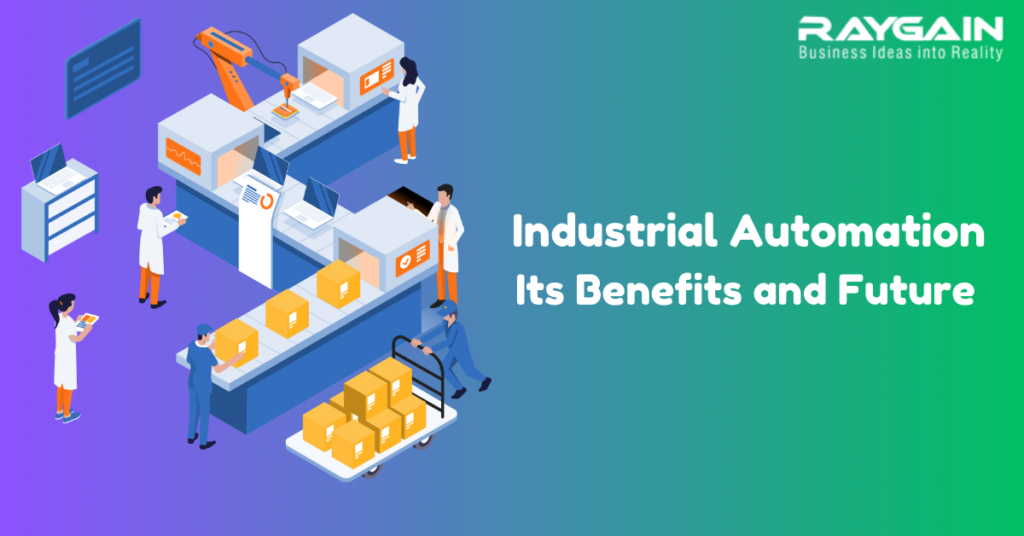
Introduction: What is Industrial AutomationIndustrial Automation revolutionizes manufacturing and production sectors . Industrial automation is where use of control systems, robots, computer and information technologies is used to handle different process and machines to handle tasks. Technologies like robotics, PLC , sensors and AI integrates in industrial operation so that it can perform human tasks , it can minimizes error and boosts productivity. Benefits Of Industrial Automation Next Gen of Industrial Automation: Artificial Intelligence and Machine Learning:Through AI/ML machines learns from past data improve and learn with time and enhances operations .AI/ML results in smarter automation systems that can analyse data , predicts defects and maintenance. Industrial Internet of Things (IIoT)To avoid downtime, track performance metrics and implementing strategies of predictive maintenance the IIoT connects devices and machines to a network, enabling seamless data exchange. Collaborative Robots (Cobots)Cobots are designed to work alongside humans, enhancing productivity while ensuring safety. Unlike traditional robots, cobots are highly flexible and can be programmed easily to perform various tasks, making them ideal for small and medium enterprises. 5G ConnectivityThe performance of real-time monitoring systems, autonomous vehicles, and remote-controlled operations enhance with the deployment of 5G networks as it provides fast and ultra reliable communication. Augmented Reality (AR) and Virtual Reality (VR)To guide trainers and technician AR and VR technology is used in industrial automation .These can be integrated in training and maintenance . AR glasses use in providing instructions while working on machinery. Green AutomationSustainability is becoming a priority. The next generation of automation will focus on energy-efficient systems, waste reduction, and renewable energy integration, aligning with global environmental goals. Real – world Examples: Automotive Industry: Tesla’s Smart ManufacturingTesla has revolutionized the automotive sector through automation. Its factories utilize advanced robotics and AI-powered systems to assemble vehicles with minimal human intervention. The use of Cobots ensures precision and speed while allowing seamless collaboration with human workers. Furthermore, predictive maintenance enabled by IIoT sensors minimizes production downtimes and enhances operational efficiency. Retail Industry: Amazon’s Fulfillment CentersAmazon’s warehouses leverage a combination of robots, AI, and IIoT to optimize inventory management and order fulfillment. Automated systems handle sorting, packing, and transportation of goods, significantly reducing order delivery times. These smart systems have also enhanced workplace safety by reducing human involvement in hazardous tasks. Conclusion:Industrial automation has transformed the manufacturing and production industries, fostering advancements in efficiency, quality, safety, and flexibility. The adoption of cutting-edge technologies such as robotics, AI/ML, IIoT, and 5G has propelled industries into a new era of innovation. Companies leveraging these advancements are not only reducing costs but also enhancing sustainability, thereby aligning with the evolving demands of modern businesses and global ecological goals.
How Data Help Business in Growth And Development
Introduction: In the era of digital transformation where new tools and technologies are available easily to simplify our lives . So in todays world its really important to use these tools and technologies for simplifying complex business problem and cater optimal solutions .The use of right techniques is necessary for future analysis and better decision making . Role Of Data In Analysis: So now the big question is what are the parameters one’s looks into his business for growth and good performance? Parameters to measure business performance from the perspective of marketing should be based or judge on the basis of historical data, no of sales, demographics, products. suppose a clothing brand wants to analyze there business performance then first thing is data collection they collect data from online platforms , social media and customer feedback use to analyze fashion trends, popular sizes , preferred color and customer base. Real time sales data from e- commerce platform help in predictive analysis as this data can be used to forecast demand for products it helps business in saving storage costs. Brand can analyze sales pattern , competitor pricing and customer behavior. With demographic data they can predict local fashion sense and which area has more sales and which area is suitable to open new stores from sales perspective .so data can be helpful in many ways .Below we can explain how data can be used in various ways with example Here Are Some Ways: Customer Segmentation and TargetingCompanies use data to segment their customer base into groups based on demographics, behavior, and preferences. This allows for more personalized marketing efforts, which are more likely to resonate with individual customers and drive sales. Product Development and InnovationData provides insights into what customers want, guiding companies in developing new products or enhancing existing ones. For instance, feedback from user reviews, social media, and purchase patterns can inform design and functionality improvements. Optimizing Supply Chain ManagementData analytics helps businesses predict demand, manage inventory, and reduce waste. For example, real-time data can alert companies to potential supply chain disruptions, enabling them to act proactively. Enhancing Customer ExperienceCompanies analyze data from customer interactions to improve service quality. Chatbots, AI-driven recommendations, and tailored loyalty programs are all examples of how businesses use data to enhance the customer journey. Risk ManagementData helps identify potential risks, such as market downturns or operational bottlenecks. Predictive analytics allows businesses to mitigate risks by developing contingency plans. Conclusion: In today’s fast-paced business environment, data is not just important; it is indispensable. Companies that effectively harness the power of data can unlock new opportunities, create superior customer experiences, and sustain long-term growth. The key lies in collecting the right data, leveraging advanced analytics, and aligning insights with strategic goals. By doing so, businesses can turn data into a catalyst for innovation and success.
How AI Enhance Business and Changes Market
Introduction: AI transform our life at great extent from personal to Professional world we have seen the glimpse of AI in almost everywhere. AI will change how companies innovate and operate .Whether its delivering more context, segregating complex tasks and enhance security system . AI will boom like a magic in providing sense of security and to make tasks easier. Here are some of the ways AI can Transform Businesses.Multimodal AIAI AgentsEnterprise SearchAI powered customer centric solutionsAI security systems Multimodal AI :It will Process information through text, images, audio and video , Multimodal AI help in addressing maintenance needs by analyzing sensor data like noise and vibrations. AI Agents: AI agents are program and system which performs tasks autonomously on behalf of user, Ai agents have lots of functionalities including decisions making , problem solving. The agents help users in many ways they track user preferences assist in recommending products and services, measuring utility on the basis of factors like progress time requirements and complexity as in and There are various AI agents like: Enterprise search : It is search result which help user to find information across organization data sources .This system uses AI, Machine learning and natural language processing to extract information .It can be used in many ways like digital workplace, customer service, Knowledge management, Talent search. Through Enterprise search business make decision more quickly and result in better outcome. AI Powered Customer Centric approach :AI can enhance customer experience and personalized user experience .The use of AI in E-commerce and Manufacturing industry uses AI which personalized shopping experience and customer support at all channels , also support in improving production and customer service. AI security systems: AI security systems can detect and combat threats, AI can help in analyzing and detecting counterfeiting documents, AI security systems also helps in identify potential risks and keep data safe , securing confidential information and help in identify deepfakes and misinformation. How AI Changes Market: AI is changing market tremendously , From content creation, Augmented Reality to customer experiences through smart shopping experiences , better healthcare solutions, smarter hiring, Transforming marketing and advertising , By enhancing personal finances. Here are some of the real world examples supporting these use cases. Amazon: AI In recommendation system uses purchase history and browsing history of users to help them finding things easier .Customer Services: In customer service the most time consuming thing is waiting on hold to talk to customer service for your queries, Many food delivery apps , shopping apps and banking system uses AI chatbots to answer customer queries instantly.Healthcare :If we talk about healthcare sector ai revolutionizes healthcare industry at fast –pace like there are AI tools that analyzes MRI and X-rays and detect early signs of cancer not only that there are virtual AI assistant which can help paitents before consulting with doctors , there are app for diet and fitness after treatment which recommends according to paitents diagnosis.Smarter Hiring :Hiring right candidate is essential for better performance and growth of an organization , candidates with right skillsets are need for an organization with increasing job opportunities , hiring process become difficult here AI helps in recruitment. AI helps in Software like HireVue analyzes video interviews to assess a candidate’s suitability for a role. Conclusion: AI is making our lives easier and enhances opportunities in business world. It saves time and efforts and gives accurate results helps in decision- making and development . The different models of AI and agents helps business in many ways in every sector which is necessary for fast- changing and growing industries. .