Cloud Computing: The Prerequisite of Digital Expansion in the present day.
Cloud computing in the modern reality of the rapidly changing digital economy has ceased to be a trend in technology, but a business need. Companies in all sectors are embracing the use of cloud computing to be more agile, efficient in their operations, and faster in adopting innovations. The cloud has become the key to digital strategy whether it is a startup creating scalable applications or an enterprise setting up modern legacy systems. Cloud computing has ceased being a mere concept of data storage on remote servers. It is a total revolution in terms of the way businesses reach technology, staff workloads, maintain information and provide services to customers. As the need to be flexible and fast grows, organizations are resorting to the trusted cloud computing Service providers to remain competitive and to be future ready.________________________________________ Learning the Cloud Computing Beyond the Basics. Cloud computing is the provision of computing services such as density of servers, storage, databases, network, analytics, and software via the internet. Businesses do not need to spend a lot to acquire physical infrastructure; instead, one can get access to scalable resources on-demand. This migration causes the decrease in the capital expenditure, easing of the IT management and letting organizations concentrate on the growth instead of maintenance. The power of cloud computing lies in its flexibility to suit changing business needs. Organizations are able to increase resources or reduce them on demand, roll out applications more rapidly and react to market pressures more quickly. Such flexibility has reimagined the approach of organizations towards digital transformation.________________________________________ The Reason Why Businesses Are giving Cloud Adoption a priority. The strategic benefits coupled with the operational benefits lead to the rapid adoption of the cloud computing: Scalability -Beyond Measurement SEO Infrastructure used traditionally tends to limit expansion as a result of limitations of hardware. Clouding enables companies to grow the computing, storage, and services in real-time. This is especially helpful in those organizations that have a volatile demand or are growing fast. Cost Optimization Financial efficiency is one of the strongest benefits of the cloud computing. The businesses are only charged according to what resources they consume and then they do not require high initial investment. The properly designed cloud computing Service contributes to the minimization of costs of hardware, maintenance, upgrades, and energy usage. Better Accessibility and Cooperation. The clouded systems help employees to access data and applications on any place. This feature promotes remote working, distributed teams and real-time collaboration, which are currently critical in the contemporary working setting. Faster Innovation Cycles The cloud platforms enable the development teams to experiment, develop, and deploy apps in a short period. Having the access to sophisticated technologies like AI, analytics, and serverless computing, business can speed up the development of products and time-to-market.________________________________________ The Position of a Cloud Computing Company. The selection of the appropriate cloud computing firm is very important in the success of cloud adoption. Cloud platforms will only offer the technology; however, professional service providers will make sure that businesses utilize the technology to their advantage. A cloud computing company will provide:• Migration planning and strategic consultation.• Infrastructure design and optimization.• Implementation and compliance support• of security.• Monitoring of performance and cost.• Ongoing technical support When organizations are not guided by experts, they can be subjected to issues of resource wastage, hidden expenses or security breaches. A partner of trust assists in synchronizing cloud strategy and business objectives.________________________________________ Cloud Computing Service: Not All about Migration. Cloud computing Service is often linked with data migration by many businesses in the beginning. Nevertheless, the current cloud services are much further than the relocation of workloads to the cloud. Total Cloud computing Service entails: Cloud Strategy & Assessment Assessing the current infrastructure and determining workloads that can be migrated to and creating a roadmap aligned to business goals. Cloud Migration & Deployment Providing a seamless, safe, and frictionless migration of systems on-premise to cloud environments. Security/Compliance management. Application of data security, identity, encryption and regulatory compliance models. Optimization & Cost Control Constantly evaluating usage trends in order to remove waste, create efficiency and optimize ROI. Business Continuity and Disaster Recovery. Making backup and recovery systems to help minimize disruption effects.________________________________________ New trends influencing cloud computing. Cloud computing is not standing still anymore, innovations are introduced to make the processes of business better: AI-Powered Cloud Services Artificial intelligence tools are now being incorporated into cloud platforms and deployed to provide predictive analytics, intelligent automation and improved customer experiences. Hybrid Strategies and Multi-Cloud Strategies. Companies are also implementing the use of multiple cloud providers or the integration of on-prem system to come up with flexibility and prevent vendor lock-in. Serverless Computing Applications are deployed without server management and without business complexity, which allows businesses to scale automatically and operate with a lower complexity. Edge Computing When it is brought to the users and devices, data processing streamlines latency and enables real-time decision-making. Improved Cloud Security Architects. Cloud security is getting a boost with zero-trust structures, artificial intelligence threat detection, and constantly observing the environment.________________________________________ Who Stands to Gain the most in Cloud Computing? Cloud computing is bringing value to business of any size and field: • Businesses that need to scale fast.• SMEs looking to acquire cost-effective IT solutions.• Companies upgrading old systems.• E-commerce sites that deal with fluctuating demand.• Analytic-driven organizations using analytics.• Remote workforce and hybrid workforce. As a matter of fact, almost any contemporary organization can be helped by the implementation of cloud technologies in case it is done in a strategic manner.________________________________________ In summary: Cloud as a Strategic Imperative. Cloud computing is optional no longer and it is a strategic necessity of businesses that want to be competitive, agile, and resilient. The cloud is the key to the sustainable digital development, as it offers scalability and cost-effectiveness, along with innovation and security. But not only technology is necessary to achieve successful cloud adoption. It requires proper planning, smart design and skilled management. An agreement with an established cloud
The Data Centre as a Business Growth Engine
To most organizations, the data centre is in the background – invisible, silent, but with the entire burden of online operations. It can be handled as infrastructure, a cost centre, or even as a technical requirement. However, the real picture has since changed a modern day data centre to be something much more powerful, a direct catalyst of growth, resilience, speed and competitive edge. Today, businesses do not only store data, they act on it, make money out of it, analyze it, keep it safe, and base all decisions on it. The work of a data centre determines not only the efficiency of IT but business in that landscape.________________________________________ More than Infrastructure: A Strategic Asset Thought-provoking companies no longer consider data centre as a passive storage facility. Rather, it plays the role of a control tower. An effective data centre ascertains: Speed of response of the applications to users. The dependability of systems on-line. The level of protection of sensitive information. The ease of scaling the activities within the company. The downtime, latency, or performance bottlenecks will not stay as an IT problem, but will echo throughout the revenues, customer confidence, brand image and business continuity. In environments where growth is high, data centre is a speed multiplier. With the introduction of digital services at a faster pace, analytics run in a more fluid fashion and workloads scale in real-time, the organization will run at a speed that is agile and not slow.________________________________________ The Unseen Customer Experience Force The customer experience can be referred to as the design, service quality, and personalization. However, not many people think of the unspoken job of the data centre behind all the interactions. All clicks, payments, logins, video-streams, or transactions are dependent on: Compute performance Network responsiveness Storage reliability Application uptime A failed data centre will result in slow page loads, missing transactions, buffering delay, or failure. Minimal delays in seconds might decrease the conversion rates, particularly in e-commerce, fintech, SaaS, and streaming services. On the contrary, a streamlined data centre means: Faster load times Seamless transactions Stable platforms Higher user satisfaction In this regard, data centre directly constructs the digital perception.________________________________________ Scalability Matters: Growth Without Limits Unpredictable demand is one of the major challenges of modern enterprises. Peaks and seasonal spikes, expansion to new regions and sudden increases in work load require flexibility. Fixed infrastructure models are limiting to growth. A data centre scale plan will allow: Fast mobilization of assets. Dynamic capacity management. Effective capacity planning. Painless integration of new applications. Lack of scalability causes delays, degraded services and upgrades in a hurry. It gives them the freedom to innovate, start and grow without any fears.________________________________________ Business Continuity, Resilience, and Risk Business continuity is no longer an option. Natural disasters, hardware problems, power outages and cyber threats can bring business to a standstill. An effective data centre infrastructure would protect against: Service interruptions Data loss Security breaches Operational shutdowns The risk mitigation shield is created by the data centre through redundancy, backup systems, disaster recovery architecture and high-availability designs. In the case of banking, healthcare, manufacturing, logistics, and government services, compliance, trust, and survival are directly related to resilience.________________________________________ Security: The New Competitive Differentiax Data security is no longer a matter of compliance requirement, but also competitive advantage. The awareness of the protection of digital assets by organizations is increased by clients, partners and regulators. A secure environment of a data centre will guarantee: Controlled physical access Network isolation Encryption enforcement Intrusion detection Continuous monitoring Lack of information on the security of the data centre observes organizations to financial losses, legal repercussions, and reputational destruction. Confidence and credibility is instead constructed in strong security architecture.________________________________________ Cost Optimization and Efficiency Although, performance and reliability are in the limelight, efficiency is also important. The inefficiency in the operations of the data centres causes: Unreasonable consumption of power. Underutilized hardware Increasing operation costs. Cooling inefficiencies The overhead is diminished by a major proportion by the modern optimization techniques that include virtualization, workload consolidation, intelligent cooling, and energy-saving hardware. An operated data centre not only becomes powerful, but also economical.________________________________________ The Drift to Hybrid and Distributed Models The trend of centralized data centre strategies is being overtaken by hybrid and distributed strategies. Organizations now blend: On-premise data centres Cloud environments Edge computing nodes Colocation facilities This development is necessitated by the fact that it requires: Reduced latency Regulatory compliance Geographic flexibility Workload specialization The Hybrid models are flexible and offer control. Distributed architectures contribute to higher performance of real-time applications, IoT systems, AI systems, and analytics systems.________________________________________ Information Centres and Velocity of Innovation Innovation relies on the experimentation, testing and quick deployment. Lack of fast infrastructure is a limiting factor to innovation. A flexible data centre setting is faster: Development cycles Testing processes AI/ML workloads Data analytics Application rollouts Innovation takes off when the teams do not have to be constrained by the compute or storage capabilities.This way the data centre can be a driver of innovation as opposed to being a limit.________________________________________ Sustainable and the Modern Mandate The technology investments are being increasingly influenced by environmental responsibility. Data centres have traditionally been characterized by high power consumption, however, it is in the midst of a sustainability transformation. Modern initiatives include: The development of renewable energy.Advanced cooling systemsEnergy-efficient hardwarePlans on carbon footprint reduction. Sustainable data centres operation has the following two advantages: Less negative impact on the environment. Reduce the long term operating costs. Sustainability is strategic and ethical to brands that are aware of ESG commitments.________________________________________ The Human Factor: Competencies and Leadership Having technology does not make a high-performing data centre. Proficiency, supervisory discipline and governance of operations are decisive factors. In order to manage effectively, it takes: Proactive monitoring Capacity forecasting Security oversight Performance tuning Readiness to respond to attacks. Even high-tech infrastructure does not work well without expert management.________________________________________ Re-Setting the Data Centre Conversation The discussion about the data centre should change. It is not merely: A storage location A server room
Implementation of Industrial Automation in Industry: Strategy, Implementation and Business Impact

The industrial industries are under the continuous pressure of enhancing efficiency, minimizing the cost of operation and ensuring the quality of the services remains constant during the process of increasing production. Within such an environment, automation of industries has become a strategic requirement as opposed to an upgrade of a technical nature. Firms that undertake automation in a systematic manner experience quantifiable productivity, reliability and competitiveness in the long term. The problem of industrial automation can not be an installation project. It is a functional change which has an impact on workflows, roles of the workforce, maintenance policies, and decision making policies. The automation implementation, integration, and management are critical factors in determining success in automation throughout the organization.________________________________________ The Strategic Initiative of Automation in Industrial The first one goes to the essence of automation which is transforming the way business is done. It has an effect on the cost structures, the production capabilities, the risk management and the predictability of the performance. An effective industrial automation organization will generally enter the project with a business mind in which automation investments are made in line with the business and financial goals. Rather than focusing their attention on machinery or the control systems alone, organizations need to consider the automation as the means of pursuing higher objectives, which include but are not limited to capacity growth, reduction of defects, safety enhancement, and optimization of resources.________________________________________ Determination of Suitable Processes to be automated Automation does not have evenly distributed benefits when applied to the industrial process. The initial one is to select the workflows where automation is possible to generate significant outcomes. Repetitive tasks, bottleneck operations, error-prone activities, and safety-sensitive processes are high-impact activities that are frequently found in high impact candidates. A skilled industrial automation consultant is significant at this stage of the evaluation. Consultants study production processes, cycle times, downtime trends and quality fluctuation to find out where automation will have the best payback. Such evaluation will save unwarranted spending and make sure that the automation process will not be extravagant.________________________________________ Process Stabilization Prior to implementation Automation increases performance results. In the case of an unstable, ill-defined, or inefficient process, the automation can also make defects and operational disruptions faster instead of getting rid of them. Hence, workflow stabilization and optimization is an essential requirement. Companies are expected to standardize operations, minimize variability, cut down on unnecessary actions and also to write down quality requirements. This step is often assisted by a competent industrial automation firm which makes sure that process redesign and system engineering has been done so that the operations are technically and structurally prepared to be integrated with automation.________________________________________ Establishing Goals of Automation There should be clear goals of the automation projects. In the absence of specific goals, the investments will become technology-based instead of being result-oriented. Common automation goals are enhanced throughput, better product quality, enhanced safety, lower operational costs, better traceability and real-time monitoring. Specific objectives establish a coordination between the management and engineering teams as well as system integrators. They also give a model in the assessment of post-deployment performance.________________________________________ How to choose the appropriate Automation Partner The selection of an automation partner is a key determinant of the outcome of a project. When organizations start their search with the keywords like industrial automation companies near me, they usually focus on local suppliers, which simplify their cooperation and allow response faster. Although a close physical location could be more logistically convenient, the decision-makers must consider technical skills, experience in the industry, ability to customize, integration abilities, and after-sales services. A capable industrial automation firm will act as a long term partner that will be in charge of designing, deploying, optimizing, and offering maintenance support. The quality of this partnership is closely associated with the success of automation.________________________________________ Selection of Technology and Equipment Automation reliability is based on the performance and the longevity of the components. Reliable manufacturers of automation and control of the industry are the suppliers of fundamental technologies such as programmable controllers, sensors, robotics systems, drives, human-machine interfaces and safety equipment. It is important to choose reliable manufacturers that will guarantee the stability of the system, availability of spares, scalability over time, and easier integration. The quality of equipment used cannot end up being of a poor quality, increasing the time spent in downtime, complicating the maintenance and achieving less efficiency. The use of technology must be made to rely on reliability and compatibility as opposed to cost only.________________________________________ Gradual Implementation of Automation Automatization of a whole facility at the same time can introduce risks in the operation. Gradual roll out will minimize disturbances as well as give firms the opportunity to prove performance gains gradually. The common approach used in organizations is to initiate pilot projects that aim at high impact bottlenecks. When benefits are quantified and refinements are done, automation can be extended to the surrounding processes and ultimately to the plant. Such a staged method enhances financial management, allows reducing downtime, and facilitates a more efficient adjustment of the workforce.________________________________________ Workforce Integration and Skill Development Robotization alters work assignments and qualifications. The operators change to supervisory duties, technicians change into diagnostics and troubleshooting functions and data monitoring functions gain critical importance. They also have successful automation programs such as systematic workforce training, change management programs and skill development plans. Firms that actively assist employees in the transition process have a smoother adoption, increased morale as well as increased productivity. Technical execution is not equally important as human factors.________________________________________ Service and Continuous Support The automation systems have to be monitored and maintained on a regular basis to maintain performance. A reputable industrial automation service provider Industrial automation solutions usually provide preventive maintenance, diagnostics, software updates, troubleshooting and performance optimization. Unless automated systems are supported by well-defined maintenance measures, they might experience unnecessary failures and unavailability. The fact that the system is serviced continuously guarantees the durability of the system, reliability and reliability in the operational gains. Automation is to
The Future of the Industry and Enterprise Operation with the Help of Private 5G.

The world is shifting to a stage whereby industries no longer view connectivity as a support feature – but as an operational resource. Traditional connectivity models fail to achieve performance and reliability requirements as businesses go to scale with automation, real time analytics, AI and IoT. This is where the private 5g networks are transforming the way of businesses, how they compete and expand. The concept of private 5G is allowing organizations to create controlled, secure and high-performance network environments tailored to the needs of industrial and enterprise use scenarios. This change is transformational to companies who are in a mission critical setting.________________________________________ The Reason Why Industries Should Privatize 5G. The industrial work of modern times produces very large amounts of data and is very dependent on real-time communication of machines, systems, and people. The manufacturing facilities, logistics bases, energy plants and healthcare campus need a predictable, secure and never-down connectivity. Public networks can be congested and their latency can vary and cannot be controlled effectively- this is a problem that poses a direct challenge to productivity and safety. A Private 5G service can overcome them by providing enterprises with a complete control of the network performance, the security policy, and the scalability. Privately 5G is becoming a strategic starting point of digital transformation within the industries rather than as an upgrade.________________________________________ Effects of the Private 5G on Manufacturing. One of the most robust users of private 5g networks is manufacturing because it requires automation and real-time monitoring. The current production lines are operated by interlinked machines, sensors, robot arms, and AI-based quality systems. In the case of Private 5G, manufacturers will have a clear cut in communication throughout the shop floor. Performance data is constantly sent through machines which are used to predict maintenance and detect faults in real time. AGV and autonomous mobile robots are highly reliable even when they are not connected. The impact is measurable: • Reduced unplanned downtime• Faster production cycles• Improved product quality• Safer working environments A private 5g network company allows manufacturers to implement such capacities on a large scale and retain high levels of control over their operations.________________________________________ Logistics and Warehousing 5G private. Speed, accuracy, and coordination are important to the logistics operations. Thousands of moving assets that are warehouses, such as robots, scanners, forklifts, and inventory systems, need continuous connectivity. P5G 5G can be used in private mode to track goods in real time, use an automated picking mechanism, and coordinate fleets of large buildings. In contrast to Wi-Fi, Private 5G has stability even in crowded spaces with unremitting motion. The result is: • Faster order fulfillment • Proper visibility of inventory. • Reduced operational errors• Better customer delivery schedules. It is why a Private 5G service is an essential facilitator of contemporary supply chains.________________________________________ Privatizing Energy and Utilities using Private 5G. Power and utility companies work over large, and frequently remote systems and network reliability is paramount. Sustained data regarding power plants, substations, pipelines and renewable energy sites are produced. Private 5G enables the asset to be tracked in real-time, detect faults automatically and respond more quickly to outages. Under edge computing integration, judgments can be made in real time- without the use of centralized systems. In the case of utilities, 5g networks are enhanced privately: • Grid reliability• Operational efficiency• Safety and compliance• Preadisaster response preparedness. The established 5G company on the basis of trust assists utilities in upgrading infrastructure without loss of data sovereignty or security.________________________________________ Healthcare and Large Campuses Private 5G. Hospitals and large campuses of an enterprise business need space to be secure and continuously connected over large distances. Good networks are relied upon by medical devices, patient monitoring systems, surveillance and access controls. The use of private 5G guarantees safe information transfer between connected systems and devices and eliminates the likelihood of a system failure or data leaks. It facilitates the application of the future as well remote diagnostics, connected ambulances, and smart campus management. To the medical professionals, the effects involve: • Improved patient care• Operational efficiency• Enhanced data security• Good connectivity in strategic areas.________________________________________ The importance of Private 5G to Companies. In the case of businesses, Private 5G is not an investment in technology, but a business choice. Organizations have the full control of the performance of the network, they have the ability to provide same service levels irrespective of the conditions of external networks. A 5g network company is a privately operated network that is structured according to the business requirements, with the ability of organizations to expand their businesses, add sophisticated applications, and keep abreast of data compliance requirements. The main benefits to companies have been: • Predictable performance• High levels of security and isolation.• Future technology scalability.• Long-term cost efficiency________________________________________ Until now, this is the “Private 5G as a Platform of Innovation. One of the most innovative technologies is AI, IoT, edge computing, and digital twins, whose development is based on private 5G. Such innovations need connection with low latency and connection reliability. Using the 5g network privately companies are able to experiment, innovate and deploy new digital solutions at a very quicker rate without being limited to the network. This speeds up the speed of time-to-market and enhances competitive positioning.________________________________________ Selecting the Ideal Partner in the private 5G. The deployment of Private 5G needs extensive knowledge in the sphere of network design, spectrum management, integration, and security. A trusted Private 5G provider is one that provides end-to-end solutions, including planning and deployment, as well as continuous optimization. When an organization is collaborating with an established provider of 5g network, it will have an opportunity to have customized architectures that can support operational objectives, industry standards, and expansion strategies.________________________________________ Future of Industry using Private 5G. With the trend of industries going autonomous and making decisions based on data, Privative 5G will be implemented as a key element of enterprise infrastructure. It will specify the efficiency of the functioning of the companies, the safety of the data flow, and the
The way Cloud Computing Companies are driving Industry Development and Organizational Change.

All industries in the world are experiencing one thing, namely; the challenge of growing data volumes, uncertain demand, growing costs of infrastructure and the need to innovate at a faster pace than ever. Organizations are no longer turning to the traditional IT systems to remain competitive. Rather, they are collaborating with a cloud computing firm that is capable of delivering scalable, secure, and performance-based digital infrastructure. The use of a contemporary cloud computing service will allow industries to be agile, resilient and intelligent. Whether it is manufacturing and logistics to finance and healthcare, the use of cloud is transforming the way companies construct, implement, and expand their businesses. ________________________________________ Cloud Computing Services Effect Impact at Industry Level. Perhaps the greatest benefit of the cloud adoption is the possibility to match IT resources to the actual business demand. Industries do not have to forecast capacity several years away. Under cloud-based infrastructure, organizations are able to upscale in times of peak demands and downscale in the off-seasons without incurring financial losses. The cloud service providers have been offering industries with the high-performance computing environments that can handle large volumes of data in real time. This is essential to industries like manufacturing, where a machine will capture sensor data that will be analysed immediately to decrease downtimes, maximize production, and enhance quality management. The cloud platforms are advantageous to retail and e-commerce industries as it addresses the problem of spike in traffic during sales events. To ensure that transactions are conducted safely and that they are in line with the prescribed regulations, financial institutions use cloud services to ensure high availability. In all the instances, cloud technology has a direct effect on operational efficiency and customer satisfaction.________________________________________ Part in Operational Agility played by Cloud Providers. Contemporary cloud vendors do not provide only storage and servers. They offer next-generation ecosystems, which facilitate automation, analytics, artificial intelligence, and app development. This enables organizations to be innovative all the time without interfering with current activities. Cloud-based industries are in a position to roll out new services more rapidly, experiment with new concepts at low risk and be responsive to market fluctuations. This kind of agility cannot be achieved with the hardwired on-premise systems where upgrades to infrastructure are often months long and costly. IT management is also made easy with the adoption of the clouds. Proactive monitoring, automated updates and centralized dashboards are some of the tools that lessen the workload on internal IT teams enabling organizations to concentrate on strategic growth rather than maintenance.________________________________________ The relevance of Private Cloud Providers to Sensitive industries. Although the public cloud platform is scalable, most industries are keen on a private cloud provider to gain better control and compliance assurance as well as security. Healthcare, banking, defense manufacturing, and enterprise SaaS are other industries that entail a separate environment that provides the protection of sensitive data and complies with stringent regulatory requirements. Cloud computing provides the flexibility, but the data isolation and tailored security policy are ensured by the use of the private cloud solutions. The private cloud is a critical consideration to mission-critical operations since organizations have enhanced performance, governance, and data residency control. In the case of enterprises dealing with proprietary data or other intellectual property, the operations of the private cloud environments can be guaranteed to neither undermine performance nor compromise security.________________________________________ The Reason Why Organizations Opt to use the best cloud providers. Collaborating with leading cloud providers enables companies to encounter distributed infrastructure over the world, developed security structures and reliability on the enterprise level. These providers are highly innovative and as a result, businesses never miss the latest technologies. The best cloud solutions have included disaster recovery capability, multi-availability, and multi-regional back-ups. This will greatly minimize the chances of downtime that can prove to be very costly to the industries using 24/7 production lines or electronic platforms. Further, the leading cloud providers are compatible with third-party tools, ERP systems, and enterprise applications to support the seamless integration of organizations to construct an interconnected digital system.________________________________________ Performance Optimization and Cloud Server Service Providers. Cloud server service providers are essential to the industries that demand the use of fast processing and low latency. Automation of manufacturing, financial market trading platforms, media streaming systems, and logistics tracking systems need high-availability and performance under heavy loads. Cloud server infrastructure helps organizations to run applications that are compute-intensive without any concern over hardware constraints. Auto scaling servers help run servers with a stable performance also when the workload is suddenly increased, which enhances the user experience and system reliability. Such flexibility of performance enables organizations to be innovative, knowing that it can sustain growth with its infrastructure.________________________________________ Strategic Value of Cloud based Hosting Providers. Cloud based hosting providers have changed the way organizations are deploying and operating applications. Businesses are able to store applications in safe and scalable cloud environments that can be accessed anywhere instead of maintaining physical servers. This comes in handy especially in organizations that are located in various places. Teams are able to work in real time, share secure data and roll out updates without interruptions to the services. Cloud-based hosting also enhances the availability of the application and thus the delivery of the service to the customers and partners. In the case of digital-first organizations, cloud hosting serves as the basis of continuous deployment, scaling, and globalization.________________________________________ Reasons why Industries should implement Cloud Computing now. The implementation of cloud computing is no longer an issue of the future, but a current need. The slow movers in cloud adoption are experiencing an increased cost of operation, slower innovation speed and inability to scale. Conversely, those organizations that have adopted cloud platforms experience flexibility, resiliency, and decision-making that is based on data. Cloud computing enables automation, predictive analytics, remote operations and intelligent systems that stipulate the current standards of the industry. It helps organizations to keep up with the world where quickness and flexibility are the keys to success. Through the experience of reliable cloud
The Revolution of MVP Development and its ability to make businesses impactful
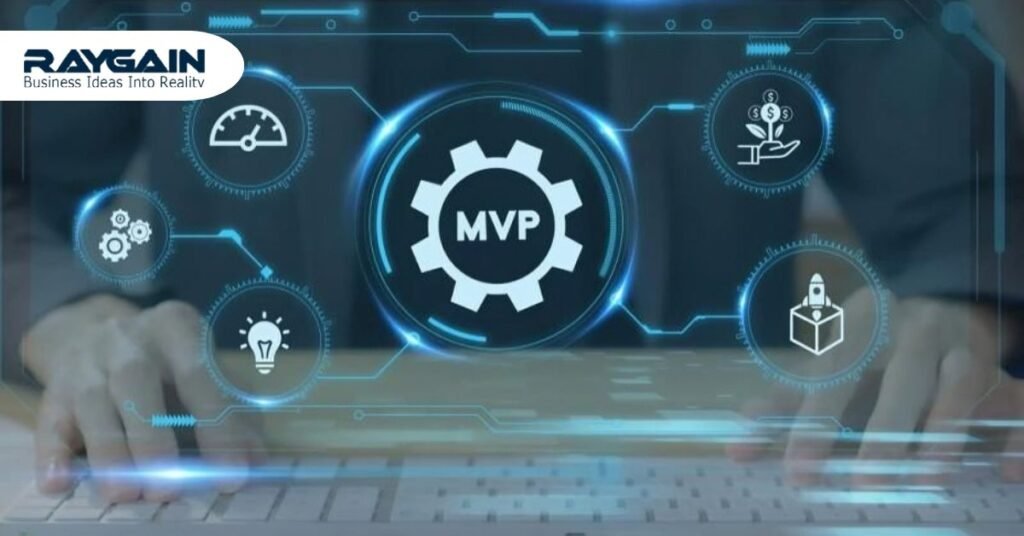
In a world where success is measured by speed, flexibility and innovation, MVP driven product development has become a strategic option as opposed to a technical one. In all sectors, businesses are changing the long, inflexible development patterns in favor of quick experimentation and interim development. MVP development services are highly organized, which contributes to this transformation, thereby helping organizations to react to market changes in the most precise and confident way. Companies no longer stake everything on one massive launch but instead will create smarter, learn more quickly and only require to scale those that work. MVP Development Causal Effect on Industry Innovation Processes of any Industry at a faster pace The high initial investment and risk that are associated with product development have shown to slow down innovation in a traditional product development. The use of MVP-based models has reduced the time of innovation dramatically in fintech, healthcare, manufacturing, retail, logistics, and SaaS, among other sectors. The industries that used to take years to test the new solutions in digital form can test them within weeks currently. The speed allows organizations to roll out new services more quickly, in real-time respond to the demand by a customer and outperform competition. In the presence of trusted MVP development services, the industries will shift their focus on planning heavy models to an execution-based innovation. Minimization of Failure Rates on Product Launches Product failure after launch is one of the greatest challenges that industries may experience. This risk is mitigated by MVP-based development which helps in verifying assumptions early. Industries no longer have to wholly depend on in-house projections and make decisions with the assistance of actual market feedback. Consequently, failures of products are reduced, adoption level is enhanced and investment is made on those opportunities which are proven besides on the ideas that are speculative. Empowering the Digital Transformation at Scale The development of MVP is a significant part of the digital transformation. MVPs are commonly used by industries that are modernizing their legacy systems to test automation, analytics, AI, and adoption of clouds prior to implementing them at a full scale. With the collaboration of an established MVP development firm in USA, organizations can have these experiments to be of enterprise standards, but flexible. This will enable industries to become digital without affecting the main operations. Democratizing innovation in organizations The development of MVP has transformed the innovators. Innovation is not confined to the R&D departments any more. Sales, operations, customer service, and supply chain teams can come up with solutions, try them out as MVPs, and prove their value. The result of this cultural change is that the industries can be more collaborative, data-driven, and open to innovation. Business Connotations of MVP Development with Companies Quicken Go-to-Market and Competitiveness Businesses with MVP-related strategies always enter the market first compared to those that adhere to conventional development strategies. Speed is directly proportional to competitive advantage, better brand positioning, faster revenue validation. Companies reduce development time with the services of professional MVP development and retain quality and scalability. Smarter Capital Allocation Companies do not prepare huge budgets at the beginning but invest little at a time. MVP development enables the leadership teams to finance projects in phases, depending on actual performance data. This strategy enhances financial discipline and capital is deployed where it can be recorded to have returns. Firms will not spend more money on the features or products that fail to appeal to users. Evidence-based Strategic Decision Making MVP Development transforms decisions based on intuition to evidence. The product strategy, pricing model and the priority given to features are guided by the user behavior, engagement levels, and feedback. Businesses collaborating with a mature company of developing MVPs in USA access to superior analytics, testing models, and performance analysis that feeds into the long term business strategy. Increased Stakeholder and Investor Trust MVPs are used with startups and growth-stage companies to have physical evidence of progress. When investors, partners and stakeholders observe actual users in an interaction with a product and not mere conceptual plans, they are assured and consequently have confidence. Ease of raising funds, partnerships and internal buy-in MVP development builds credibility, which makes it a less challenging task. Resource Optimization and Operational Efficiency It allows firms to minimize complexity that is not necessary in the process of ensuring the necessary functionality is achieved. The working teams become more effective, operational overhead is reduced, and internal resources become more aligned to business priorities. MVP workflows do not create any waste and make teams work on high impact results instead of being over-engineered. Industry-Specific Impact Exemplary Fintech and Banking MVPs also allow business financial institutions to innovate safely and with regulatory compliance; they can quickly test payment systems, digital wallets, compliance processes, and customer-onboarding processes. Healthsurgery and Life Sciences MVPs help healthcare organizations to test telemedicine applications, patient interaction platforms, and data management systems prior to scaling because it mitigates the regulatory and operational risks. Automation in manufacturing and industry MVPs can assist the manufacturers to test smart factory solutions, predictive maintenance systems and IoT integrations without disrupting the production environments. Retail and E-commerce MVP development is a strategy that retailers employ to test personalization engines, supply chain automation, and omnichannel experiences and enhance customer retention and responsiveness to operational changes. Enterprise Software and SaaS With MVP-based SaaS, companies will release faster, evolve according to the behavior of the users, and scale only the features that provide consistent value. Reasons why Companies would choose MVP Development Company in USA MVP development company in USA has strategic, technical, and operational benefits, which make it a favorite company to be engaged by businesses in various industries. Such businesses are integrated with innovation-based thinking coupled with good governance, security benchmarks, and understanding of the global market. The MVP partners in the US are known to make product development congruent to business results, thereby guaranteeing scalability, compliance and long term sustainability. LTC Business Implication of MVP development MVP based organizations are
Cyber Security: 21st Century Business security.

In the current hyper connected digital world, cyber security is an urgent business concern and not a technical consideration anymore. With the trend where companies are more and more dependent on cloud platforms, remote workplaces, and making decisions based on the data, the danger of cyberattacks has increased manifold. Ransomware attacks and phishing schemes, data breaches, and insider threats are a threat to small and large businesses alike. This increased risk has led to the need to seek the more advanced and leading cyber security companies with the ability to protect and insure against business continuity.________________________________________ The Increasing Significance of Cyber Security. There is unprecedented rapid development of cyber threats. Advanced tools that are based on artificial intelligence, automation and social engineering are now being used by hackers to exploit vulnerabilities. One security breach will lead to financial loss, reputation, regulatory fines, and customer mistrust. This is the reason why organizations are in the hunt of the most effective cyber security service to secure sensitive information, intellectual property and customer information.Cyber security is no longer an option whether one is a startup, a mid-sized or a multinational corporation. It is a key building block of sustainable digital development.________________________________________ What Is the best cyber security company? To select the most suitable cyber security company, one should do more than a price or service list comparison. An effective cyber security partner would provide an active, strategic, and tailored security strategy. The main characteristics that constitute the leading security companies are: • State-of-the art threat detection and prevention.• Incident response and real time monitoring.• Adherence to international security requirements and policies.• Good proficiency in cloud security, network and endpoint security.• Good experience in various industries. The major cyber security firms are more concerned about prevention as opposed to response, in assisting businesses avoid attacks and not respond once they are attacked.________________________________________ Position of a Cyber Security Service Provider. A cyber security service provider is a service provider that serves as an appendix of IT and risk management departments of an organization. These suppliers can provide end to end solutions including assessment, implementation, monitoring and continuous improvement. The most common services are vulnerability assessments, penetration testing, managed security services, firewall management, endpoint protection and data encryption. The majority of data security firms deal with the protection of databases, cloud computing, and confidential business data against security threats of unauthorized access and breaches. Businesses can grow by engaging the services of a well established cyber security provider and leave the complicated security issues to them.________________________________________ Cyber Security Consulting: Tactical Protection. In addition to tools and technology, cyber security is an element that needs strategic planning. It is at this point that the best cyber security consulting firms can come in handy. Cyber security consultants assist companies in determining threats, risk analysis, and formulate long term security policies that meet the business goals. The benefit of a localized cyber security consultant is that they are close by and responsive as well as can understand the local compliance needs. Consultants collaborate with the internal teams in creating systems that reduce risk and facilitate operations.________________________________________ The Cyber Security Companies in USA: Global Standards. Innovative, high-research, and compliance with strict regulatory standards are all the characteristics of the cyber security company in the USA market. The security companies based in the U.S. have the advantage since many global organizations are ready to collaborate with them because their work is based on compliance frameworks like ISO, SOC, HIPAA, and GDPR. In the USA, cyber security firms tend to be on the forefront of designing innovative cyber security solutions by threat intelligence, zero-trust security designs, and cloud security architecture. Their practice in dealing with enterprises in the fields of finance, healthcare, manufacturing, and technology will render them valuable associates of businesses globally.________________________________________ Data Protection Firms and Sensitive Information Safeguarding. The contemporary companies rely on data. With organizations gathering and processing a large volume of information, the services of data security companies have become more significant. These are companies that have the specialization of protecting both structured and unstructured data in on-premises, clouds as well as in hybrid environments. Some of the data security solutions are encryption, access control, data loss prevention, and secure backup systems. As the global system of regulations becomes stricter, a company should have a mechanism to guarantee that the data of customers and organizations is secured at any given time.________________________________________ The need to have cyber security services to businesses today. The effects of failure to observe cyber security may be dire. Cyber incidents may cause downtime that will interfere with operations, postpone projects, and even lead to revenue loss. More to the point, customers want business to safeguard their information and privacy. The use of a trusted cyber security service provider assists organizations to develop resiliency to cyber threat. Threat intelligence, continuous monitoring, and rapid incident response are important to make sure that the potential risks are detected and mitigated before they can escalate in magnitude. Besides, cyber security services are complementary to digital transformation programs, as they allow adopting a secure cloud, remote work, and scalable IT environments.________________________________________ Selecting the appropriate Cyber Security Partner. There are many partners out there to choose so choosing an appropriate cyber security partner is not always easy. Companies need to seek providers of customized solutions instead of one-fit-all solutions. The most appropriate cyber security service providers go the extra mile to learn the business objectives, industry issues and risk profiles and then develop security plans. Collaboration with the leading cyber security consulting companies helps to make sure that the investments are made in the field of security in accordance with the long-term development strategies and regulatory norms. Cyber security is not only reduced through a proactive approach, but it also increases operational confidence and customer trust.________________________________________ Conclusion Cyber security is not merely an IT issue anymore it is a business requirement. Due to the increased sophistication of cyber threats, companies should use the services of the top cyber security
Looking for the best cybersecurity company? Here are must-have features in 2025.

Cyberattacks keep changing quicker than many companies can handle. By 2025, dangers such as smart viruses, self-running bots, fake identities, or scam videos forced firms into tougher protection modes. Because of this shift, picking a solid cybersecurity provider isn’t optional anymore – it’s essential just to stay running. Yet when loads of sellers say they’re the “best security choice,” how can you actually pick the correct fit? What sets apart a typical best cybersecurity company from a top-tier security partner that actually defends today’s businesses? In this walkthrough, you’ll discover the key traits that set top cybersecurity firms apart in 2025 – while outfits like Raygain Tech deliver strong defense for worldwide enterprises. Because staying ahead means using smarter tools today. Why Strong Cybersecurity Matters More Than Ever in 2025 First off, take a look at today’s digital dangers – this sets the stage when figuring out which cybersecurity firm stands out AI-enhanced cyberattacks can breach systems 10x faster than before. Ransomware 4.0 hits fast – locks down whole networks quick using smart tools that run on their own. Credential theft makes up close to 60% of data leaks worldwide. Cloud-native breaches go after setup flaws, APIs – also serverless actions. Deepfake scams & voice cloning are bypassing traditional verification systems. Businesses want safety helpers that plan early instead of acting after problems hit. This is why companies today keep looking for a solid cybersecurity team – one using smart tech, auto-systems, constant checks, also staying ahead of threats. 2025’s Must-Have Features of the Best Cyber Security Company Here’s what really matters when picking a top-tier security helper right now. 1. AI-Driven Threat Detection & Autonomous Response The top cybersecurity firm in 2025 will mix skilled people with smart tech that learns on its own.AI enables: Real-time anomaly detection Behavioral analytics Finding threats before they strike Devices that are hacked get cut off by themselves Zero-delay incident response This cuts down the long wait from break-in to response. Raygain combines smart security monitoring with self-running checks – slashing reaction times from hours down to just minutes. 2. Zero Trust Security Architecture Zero Trust isn’t something you can skip anymore. Because it holds up how companies protect themselves today.A top cyber security service provider must deliver: Identity-based access control Continuous verification Device posture checks Micro-segmentation Least-privilege enforcement With Zero Trust, nothing gets automatic trust – not users, gadgets, or APIs – so damage from hacks drops way down. 3. 24/7 SOC Monitoring & Threat Hunting If a business says it’s top in cybersecurity, then it should run a round-the-clock security hub staffed by qualified experts.Round-the-clock monitoring includes: Log analysis Endpoint monitoring Intrusion detection Real-time threat hunting Rapid mitigation Raygain’s security crews stay on guard nonstop, using live tracking plus smart tech to block new dangers before they hit companies. 4. Cloud-Native Security for Multi-Cloud Environments In 2025, plenty of companies run AWS alongside Azure, mix in Google Cloud, or stick with on-site setups instead.So, top cybersecurity helpers should offer: Cloud vulnerability management API security Who you are, plus how you get in Cloud workload protection Kubernetes plus containers need solid protection Raygain’s setup keeps clouds safe in varied setups, yet stays light on daily workloads – no extra hassle. It handles different providers smoothly while avoiding slowdowns, using smart rules that adapt quietly behind the scenes. 5. End-to-End Compliance & Governance Expertise If your company requires ISO 27001, GDPR, HIPAA, PCI-DSS, SOC 2, or rules tied to your field, a solid cyber safety helper must offer: Compliance gap analysis Governance frameworks Policy creation Risk assessments Audit readiness support The top cybersecurity firm helps your business follow international rules while staying clear of fines. 6. Cybersecurity Automation with SOAR & SIEM Platforms Hand-led safety tasks just fall behind today’s threat pace.So this is what top security firms count on insteadSIEM (Security Information & Event Management) for real-time log analyticsSOAR (Security Orchestration, Automation, and Response) for automated workflowsThis combination improves: Threat visibility Response time Accuracy Decision-making Raygain gives built-in SOAR tools which handle around three-quarters of routine security work, so analysts can shift attention to tougher risks. 7. Strong Data Protection & Encryption Capabilities Data’s now like gold – so hackers want it most.A top cybersecurity helper should provide: Data loss prevention (DLP) End-to-end encryption Secure key management Insider threat detection Backup & recovery Raygain’s strong encryption keeps private info safe – safe from hackers, even if systems get hit. 8. Advanced Endpoint & Network Security Solutions Working from home means more weak spots in security.The top cybersecurity firm should offer: EDR (Endpoint Detection & Response) MDR (Managed Detection & Response) NDR (Network Detection & Response) Fence that blocks break-ins, also stops sneaky attacks before they start Secure WiFi and VPN infrastructure Raygain uses smart tech to lock down every gadget plus connection. It spots threats fast while keeping things running smooth instead of slowing them down. 9. Proactive Penetration Testing & Red Teaming Cybersecurity isn’t only responding – it’s getting ready ahead of time.Leading companies in online safety give: Penetration testing Red team simulations Vulnerability assessments Phishing simulations Application security testing Such methods let companies patch flaws before hackers spot them. 10. Incident Response & Breach Recovery Services A real cyber protection buddy’s gotta jump in fast once stuff hits the fan – because downtime waits for no one.The top companies give you: Incident forensics Rapid containment Malware eradication Data recovery Post-incident reporting Future-proofing recommendations Raygain’s crew steps in fast when things go wrong, so companies can limit harm while getting back on track quickly – thanks to their swift action. Why Raygain Is a Leading Cyber Security Service Provider in 2025 Raygain Tech uses smart tools, automated systems, a lock-every-door strategy, alongside modern cloud defenses to keep businesses safe across every area they operate in.Raygain’s core cybersecurity offerings include: AI-Driven SOC Operations Managed Detection & Response (MDR) Cloud & Application Security Zero Trust Implementations Network & Endpoint Protection Compliance & Governance Vulnerability Management & Pen Testing Incident Response & Digital Forensics Thanks
Why Digital Transformation Services Are Now Powered by Gen AI & Automation

The pace at which the world of enterprise technology is changing was never imagined five years ago. In a world where digital transformation services are no longer purely about cloud adoption, modernization of legacy, or enabling remote work, in 2025, the real competitive advantages come through Gen AI, hyperautomation, and intelligent data-driven decisioning. From telecom to manufacturing and BFSI, every industry is now redefining growth with digital transformation IT services powered by LLMs, AI-driven workflows, autonomous operations, and advanced analytics. Raygain Technologies is one such company leading this next phase of transformation with solutions that help enterprises scale up faster, operate smarter, and innovate continuously. In this blog, we look at why Gen AI + Automation has now become the new operating system of digital transformation and why enterprises must upgrade now if they want to remain relevant. The Shift: From Digital Transformation to Intelligent Transformation Traditional digital transformation focused on digitization of manual tasks, migration of workloads onto the cloud, and the implementation of modern tools. These steps were important but created fragmented systems that were still very dependent on human intervention. The 2025 shift ushers in a different era altogether: Intelligent Transformation. It is a wave propelled by: Generative AI (Gen AI) for creativity, prediction and automation Automation of workflows for end-to-end orchestration Self-improving learning systems without human intervention Real-time analytics based on clean, structured data Cloud-native architectures for flexibility and agility Today, the services of digital transformation focus on enabling intelligent processes, not just digital ones. Why Gen AI Is Revolutionizing Digital Transformation Services 1. Gen AI accelerates enterprise efficiency Large language models enable organizations to automate: Documentation Code generation Customer care Creating reports Writing proposals Data analysis Gen AI reduces workflow completion time by 60–75%, thereby letting enterprises move faster than ever. This is why leading digital transformation service providers nowadays embed AI copilots in every major business function. 2. Custom Automation Replaces Repetitive Manual Effort Automation is no longer about simple rule-based scripts. By 2025, enterprises will be adopting hyperautomation, redefining work: AI ML RPA Process mining Low-code orchestration Collectively, these systems automate multi-step operations of a complex nature. Raygain Technologies combines Gen AI with automation platforms to enable workflows that run themselves, thus reducing operational costs and human errors substantially for enterprises. 3. AI improves decision-making with predictive insights Earlier digital transformation IT services were focused on descriptive analytics, explaining what happened. The novel approach now uses AI to answer: What will occur? What is the best action to take? How can outcomes be optimized? Enterprises get: Real-time dashboards Predictive maintenance Customer behavior forecasts Intelligent forecasting Automated anomaly detection The outcome is faster and smarter strategic decisions. 4. Enhanced Customer Experiences at Scale In 2025, customer expectations are higher than ever. They want to see instant answers, personalized experiences, and support across digital platforms. AI allows: 24/7 intelligent chatbots Virtual assistants Customized recommendations Sentiment analysis Predictive retention systems Digital transformation services by Raygain merge different models of Gen AI that help enterprises deliver human-like and hyper-personalized customer engagement, often reducing the support workload by as much as 50%. 5. Faster development and modernization of software AI-powered development tools dramatically accelerate software engineering activities. With Gen AI, enterprises can: Auto-generate code Code quality review Bug detection Test case generation Modernize legacy systems faster This shortens development cycles, reduces costs, and makes digital transformation more available. Engineering teams at Raygain are using AI-driven DevOps workflows to deliver modernization projects much faster than traditional methods. The Role of Cloud in AI-Powered Transformation Cloud adoption is no longer optional. AI requires: huge computing power Distributed data pipelines Scalable storage On-demand GPU clusters That is why digital transformation IT services today emphasize cloud-native architectures. Through AWS, Azure, or GCP, enterprises have to adopt: Container-based systems Kubernetes orchestration Microservices Serviceless computing Cloud forms the foundation of deploying automation and AI at scale. Security: Why AI-Driven Enterprise Protection Matters in 2025 Enterprises cannot depend on outdated tools in the case of increasing cyberattacks and data breaches. Advanced services for digital transformation synchronize AI-enabled cybersecurity to detect threats even before they occur. AI improves the following: Identity Management Access control Data governance Network monitoring Fraud detection Automated incident response AI-driven engines operate within Raygain cybersecurity frameworks to observe systems continuously, respond to risks in real time, and maintain business compliance by protecting sensitive data. Real-World Use Cases: How AI & Automation Are Reshaping Industries 1. Telecom Automatic network monitoring AI-powered customer service Predictive maintenance for towers and equipment 2. Manufacturing Quality Inspection using Computer Vision Automated material planning Smart factory workflows 3. BFSI Fraud detection Automated loan processing Intelligent document reading 4. Healthcare AI-assisted diagnosis Automated patient scheduling Health data analytics Companies adopting AI-powered digital transformation services are experiencing a measurable competitive advantage. How Raygain Enables AI-Driven Digital Transformation Raygain Technologies provides AI-first digital transformation services for the following: AI consulting & strategy Data engineering & cloud modernization Gen AI–powered Automation Intelligent enterprise solutions AI-powered cybersecurity Software engineering & application modernization 24/7 managed IT services Raygain helps enterprises build future-ready systems that are scalable, secure, and optimized for growth. Why Businesses Must Adopt AI-Powered Digital Transformation in 2025 AI and automation are no longer emerging technologies but a required enabler of enterprise competitiveness. Companies that embrace them today enjoy the following benefits: Faster innovation cycles Higher operational efficiency Improved customer satisfaction Reduced costs Stronger security Business agility improved Those that wait risk ceding the lead to competitors that can move faster, serve customers better, and operate more intelligently. Final Thoughts Digital transformation services are undergoing a sea change, driven by Gen AI, automation, and cloud-native solutions. It is these businesses that will be leading their industries in 2025 and beyond as they begin embracing this new phase of intelligent transformation. Raygain Technologies leads this evolution by enabling enterprises to unlock the full value of AI-driven transformation with solutions that are secure, reliable, and scalable. If you’re ready to accelerate your digital journey, Raygain is ready to guide you. Book Your Free Consultation
How AI Is Reinventing Telecom Services in 2025: What Businesses Must Know

In 2025, a new era is unfolding in the telecom landscape. Rapid developments in AI, automation, and predictive analytics are transforming the way modern telecom services are offered. Around the globe, businesses continue to power their communication systems with upgrades for growing data needs, higher connectivity speed, and unparalleled customer experiences. AI has become the driving force for this transformation. The integration of AI, from network optimization to fraud detection, is enabling more intelligent, efficient, and secure networking for both enterprises and telecom service providers in India. Enterprises on this journey are being aided by companies like Raygain Technologies through their AI-enabled telecom modernization frameworks, which improve performance, reduce costs, and speed up digital transformation. 1. AI-Powered Network Optimization Every second, telecom networks generate a lot of data. The demands for today’s real-time network cannot be monitored by traditional manual monitoring. This is where AI makes the biggest impact. AI models can: Predict congestion Optimize bandwidth in real time Prioritize critical traffic Detect anomalies before they affect users This means that for those businesses reliant on telecom services, there will be enhanced uptimes, lower latency, and higher network performance consistently. 2. Self-Healing Networks for Zero Downtime One of the most revolutionary innovations powered by AI is the concept of self-healing networks. These intelligent systems: Detect faults instantly Perform automated root-cause analysis. Perform corrective actions Prevent outages before they escalate It significantly reduces downtime and increases service continuity, which is crucial for enterprises operating in real-time environments such as finance, healthcare, and IT. 3. AI Driven Customer Experience Automation The telecom industry handles millions of customer interactions on a daily basis. With AI, telecom support is becoming smarter, faster, and more personalized. AI-powered CX tools enable: Intelligent Call Routing Automated responses Predictive ticket resolution Sentiment and intent analysis Personalized support journeys This helps the telecom providers reduce workload, cut response time, and maintain high customer satisfaction at scale. 4. AI in 5G and 6G Evolution While India is gearing up for widespread 5G adoption and researching the readiness of 6G, AI is integral to managing next-generation networks. AI improves: Ultra-low latency operations Device density management Energy-efficient tower performance Network slice optimization IoT and edge network coordination This makes AI indispensable for the future of telecom infrastructure. 5. AI-Enhanced Telecom Security Cyber threats are increasing at an alarming rate, and among the main targets are telecom networks. AI fortifies telecom defense with: Real-time intrusion detection Anomaly monitoring Fraud prevention Identity verification Secure routing of traffic AI security models are increasingly being used by various telecom service providers in India to protect critical digital infrastructure. 6. AI in IoT, Smart Devices & Smart Cities With billions of devices connecting, telecom networks have unprecedented data loads to manage. AI helps by: Predicting device failures IoT Traffic Congestion Management Optimizing smart city infrastructure Reducing power consumption From healthcare wearables to smart factories, the AI-powered telecom service allows new opportunities. 7. How Raygain Supports AI Telecom Transformation The modern enterprise requires a telecom system that is fast, scalable, and intelligent. That is where Raygain Technologies comes into play, with AI-driven transformation solutions for telecom modernization. Raygain helps organizations: Implementing AI Automation across telecom workflows Migrate Legacy Systems to Cloud-Native, Intelligent Telecom Architecture Deploy analytics and predictive models for network optimization Strengthen telecom security with AI-powered threat detection At Raygain, with experience in digital transformation and enterprise AI adoption, we help businesses build future-ready telecom ecosystems. 8. Optimizing Cost via AI The following points explain how AI helps reduce the operational costs of telecoms: Automate repetitive activities Reducing manual monitoring Preventing network failures Energy use optimization Increasing infrastructure lifespan For companies managing high-volume connectivity, these cost savings go directly to the bottom line. 9. AI Analytics for Better Business Decisions AI-driven advanced telecom analytics provides deeper network insights and actionable intelligence to businesses. Companies get visibility into: Peak usage periods Customer behavior Device performance Network health metrics Predictive growth trends This helps organizations to streamline infrastructure investments and enhancement of service delivery. Conclusion: The Future of Telecom Services Is AI-Driven 2025 is an inflection point for the telecom industry. AI reimagines the way networks function, data flows, threats are handled, and customers interact with their respective telecom operators. It allows for quicker decision-making, higher automation, fewer outages, and greater personalization of the experience for end-users. As large organizations scale up digital operations, AI-powered services for telecom become more of a necessity than an option. With expertise in enterprise AI and digital transformation, Raygain Technologies supports organizations and telecom service providers in the adoption of next-generation telecom capabilities within the country. AI is not only improving telecommunications; it’s redefining the future of global connectivity, and Raygain is helping businesses move confidently into that future.