The Revolution of MVP Development and its ability to make businesses impactful
In a world where success is measured by speed, flexibility and innovation, MVP driven product development has become a strategic option as opposed to a technical one. In all sectors, businesses are changing the long, inflexible development patterns in favor of quick experimentation and interim development. MVP development services are highly organized, which contributes to this transformation, thereby helping organizations to react to market changes in the most precise and confident way. Companies no longer stake everything on one massive launch but instead will create smarter, learn more quickly and only require to scale those that work. MVP Development Causal Effect on Industry Innovation Processes of any Industry at a faster pace The high initial investment and risk that are associated with product development have shown to slow down innovation in a traditional product development. The use of MVP-based models has reduced the time of innovation dramatically in fintech, healthcare, manufacturing, retail, logistics, and SaaS, among other sectors. The industries that used to take years to test the new solutions in digital form can test them within weeks currently. The speed allows organizations to roll out new services more quickly, in real-time respond to the demand by a customer and outperform competition. In the presence of trusted MVP development services, the industries will shift their focus on planning heavy models to an execution-based innovation. Minimization of Failure Rates on Product Launches Product failure after launch is one of the greatest challenges that industries may experience. This risk is mitigated by MVP-based development which helps in verifying assumptions early. Industries no longer have to wholly depend on in-house projections and make decisions with the assistance of actual market feedback. Consequently, failures of products are reduced, adoption level is enhanced and investment is made on those opportunities which are proven besides on the ideas that are speculative. Empowering the Digital Transformation at Scale The development of MVP is a significant part of the digital transformation. MVPs are commonly used by industries that are modernizing their legacy systems to test automation, analytics, AI, and adoption of clouds prior to implementing them at a full scale. With the collaboration of an established MVP development firm in USA, organizations can have these experiments to be of enterprise standards, but flexible. This will enable industries to become digital without affecting the main operations. Democratizing innovation in organizations The development of MVP has transformed the innovators. Innovation is not confined to the R&D departments any more. Sales, operations, customer service, and supply chain teams can come up with solutions, try them out as MVPs, and prove their value. The result of this cultural change is that the industries can be more collaborative, data-driven, and open to innovation. Business Connotations of MVP Development with Companies Quicken Go-to-Market and Competitiveness Businesses with MVP-related strategies always enter the market first compared to those that adhere to conventional development strategies. Speed is directly proportional to competitive advantage, better brand positioning, faster revenue validation. Companies reduce development time with the services of professional MVP development and retain quality and scalability. Smarter Capital Allocation Companies do not prepare huge budgets at the beginning but invest little at a time. MVP development enables the leadership teams to finance projects in phases, depending on actual performance data. This strategy enhances financial discipline and capital is deployed where it can be recorded to have returns. Firms will not spend more money on the features or products that fail to appeal to users. Evidence-based Strategic Decision Making MVP Development transforms decisions based on intuition to evidence. The product strategy, pricing model and the priority given to features are guided by the user behavior, engagement levels, and feedback. Businesses collaborating with a mature company of developing MVPs in USA access to superior analytics, testing models, and performance analysis that feeds into the long term business strategy. Increased Stakeholder and Investor Trust MVPs are used with startups and growth-stage companies to have physical evidence of progress. When investors, partners and stakeholders observe actual users in an interaction with a product and not mere conceptual plans, they are assured and consequently have confidence. Ease of raising funds, partnerships and internal buy-in MVP development builds credibility, which makes it a less challenging task. Resource Optimization and Operational Efficiency It allows firms to minimize complexity that is not necessary in the process of ensuring the necessary functionality is achieved. The working teams become more effective, operational overhead is reduced, and internal resources become more aligned to business priorities. MVP workflows do not create any waste and make teams work on high impact results instead of being over-engineered. Industry-Specific Impact Exemplary Fintech and Banking MVPs also allow business financial institutions to innovate safely and with regulatory compliance; they can quickly test payment systems, digital wallets, compliance processes, and customer-onboarding processes. Healthsurgery and Life Sciences MVPs help healthcare organizations to test telemedicine applications, patient interaction platforms, and data management systems prior to scaling because it mitigates the regulatory and operational risks. Automation in manufacturing and industry MVPs can assist the manufacturers to test smart factory solutions, predictive maintenance systems and IoT integrations without disrupting the production environments. Retail and E-commerce MVP development is a strategy that retailers employ to test personalization engines, supply chain automation, and omnichannel experiences and enhance customer retention and responsiveness to operational changes. Enterprise Software and SaaS With MVP-based SaaS, companies will release faster, evolve according to the behavior of the users, and scale only the features that provide consistent value. Reasons why Companies would choose MVP Development Company in USA MVP development company in USA has strategic, technical, and operational benefits, which make it a favorite company to be engaged by businesses in various industries. Such businesses are integrated with innovation-based thinking coupled with good governance, security benchmarks, and understanding of the global market. The MVP partners in the US are known to make product development congruent to business results, thereby guaranteeing scalability, compliance and long term sustainability. LTC Business Implication of MVP development MVP based organizations are
Cyber Security: 21st Century Business security.

In the current hyper connected digital world, cyber security is an urgent business concern and not a technical consideration anymore. With the trend where companies are more and more dependent on cloud platforms, remote workplaces, and making decisions based on the data, the danger of cyberattacks has increased manifold. Ransomware attacks and phishing schemes, data breaches, and insider threats are a threat to small and large businesses alike. This increased risk has led to the need to seek the more advanced and leading cyber security companies with the ability to protect and insure against business continuity.________________________________________ The Increasing Significance of Cyber Security. There is unprecedented rapid development of cyber threats. Advanced tools that are based on artificial intelligence, automation and social engineering are now being used by hackers to exploit vulnerabilities. One security breach will lead to financial loss, reputation, regulatory fines, and customer mistrust. This is the reason why organizations are in the hunt of the most effective cyber security service to secure sensitive information, intellectual property and customer information.Cyber security is no longer an option whether one is a startup, a mid-sized or a multinational corporation. It is a key building block of sustainable digital development.________________________________________ What Is the best cyber security company? To select the most suitable cyber security company, one should do more than a price or service list comparison. An effective cyber security partner would provide an active, strategic, and tailored security strategy. The main characteristics that constitute the leading security companies are: • State-of-the art threat detection and prevention.• Incident response and real time monitoring.• Adherence to international security requirements and policies.• Good proficiency in cloud security, network and endpoint security.• Good experience in various industries. The major cyber security firms are more concerned about prevention as opposed to response, in assisting businesses avoid attacks and not respond once they are attacked.________________________________________ Position of a Cyber Security Service Provider. A cyber security service provider is a service provider that serves as an appendix of IT and risk management departments of an organization. These suppliers can provide end to end solutions including assessment, implementation, monitoring and continuous improvement. The most common services are vulnerability assessments, penetration testing, managed security services, firewall management, endpoint protection and data encryption. The majority of data security firms deal with the protection of databases, cloud computing, and confidential business data against security threats of unauthorized access and breaches. Businesses can grow by engaging the services of a well established cyber security provider and leave the complicated security issues to them.________________________________________ Cyber Security Consulting: Tactical Protection. In addition to tools and technology, cyber security is an element that needs strategic planning. It is at this point that the best cyber security consulting firms can come in handy. Cyber security consultants assist companies in determining threats, risk analysis, and formulate long term security policies that meet the business goals. The benefit of a localized cyber security consultant is that they are close by and responsive as well as can understand the local compliance needs. Consultants collaborate with the internal teams in creating systems that reduce risk and facilitate operations.________________________________________ The Cyber Security Companies in USA: Global Standards. Innovative, high-research, and compliance with strict regulatory standards are all the characteristics of the cyber security company in the USA market. The security companies based in the U.S. have the advantage since many global organizations are ready to collaborate with them because their work is based on compliance frameworks like ISO, SOC, HIPAA, and GDPR. In the USA, cyber security firms tend to be on the forefront of designing innovative cyber security solutions by threat intelligence, zero-trust security designs, and cloud security architecture. Their practice in dealing with enterprises in the fields of finance, healthcare, manufacturing, and technology will render them valuable associates of businesses globally.________________________________________ Data Protection Firms and Sensitive Information Safeguarding. The contemporary companies rely on data. With organizations gathering and processing a large volume of information, the services of data security companies have become more significant. These are companies that have the specialization of protecting both structured and unstructured data in on-premises, clouds as well as in hybrid environments. Some of the data security solutions are encryption, access control, data loss prevention, and secure backup systems. As the global system of regulations becomes stricter, a company should have a mechanism to guarantee that the data of customers and organizations is secured at any given time.________________________________________ The need to have cyber security services to businesses today. The effects of failure to observe cyber security may be dire. Cyber incidents may cause downtime that will interfere with operations, postpone projects, and even lead to revenue loss. More to the point, customers want business to safeguard their information and privacy. The use of a trusted cyber security service provider assists organizations to develop resiliency to cyber threat. Threat intelligence, continuous monitoring, and rapid incident response are important to make sure that the potential risks are detected and mitigated before they can escalate in magnitude. Besides, cyber security services are complementary to digital transformation programs, as they allow adopting a secure cloud, remote work, and scalable IT environments.________________________________________ Selecting the appropriate Cyber Security Partner. There are many partners out there to choose so choosing an appropriate cyber security partner is not always easy. Companies need to seek providers of customized solutions instead of one-fit-all solutions. The most appropriate cyber security service providers go the extra mile to learn the business objectives, industry issues and risk profiles and then develop security plans. Collaboration with the leading cyber security consulting companies helps to make sure that the investments are made in the field of security in accordance with the long-term development strategies and regulatory norms. Cyber security is not only reduced through a proactive approach, but it also increases operational confidence and customer trust.________________________________________ Conclusion Cyber security is not merely an IT issue anymore it is a business requirement. Due to the increased sophistication of cyber threats, companies should use the services of the top cyber security
Looking for the best cybersecurity company? Here are must-have features in 2025.

Cyberattacks keep changing quicker than many companies can handle. By 2025, dangers such as smart viruses, self-running bots, fake identities, or scam videos forced firms into tougher protection modes. Because of this shift, picking a solid cybersecurity provider isn’t optional anymore – it’s essential just to stay running. Yet when loads of sellers say they’re the “best security choice,” how can you actually pick the correct fit? What sets apart a typical best cybersecurity company from a top-tier security partner that actually defends today’s businesses? In this walkthrough, you’ll discover the key traits that set top cybersecurity firms apart in 2025 – while outfits like Raygain Tech deliver strong defense for worldwide enterprises. Because staying ahead means using smarter tools today. Why Strong Cybersecurity Matters More Than Ever in 2025 First off, take a look at today’s digital dangers – this sets the stage when figuring out which cybersecurity firm stands out AI-enhanced cyberattacks can breach systems 10x faster than before. Ransomware 4.0 hits fast – locks down whole networks quick using smart tools that run on their own. Credential theft makes up close to 60% of data leaks worldwide. Cloud-native breaches go after setup flaws, APIs – also serverless actions. Deepfake scams & voice cloning are bypassing traditional verification systems. Businesses want safety helpers that plan early instead of acting after problems hit. This is why companies today keep looking for a solid cybersecurity team – one using smart tech, auto-systems, constant checks, also staying ahead of threats. 2025’s Must-Have Features of the Best Cyber Security Company Here’s what really matters when picking a top-tier security helper right now. 1. AI-Driven Threat Detection & Autonomous Response The top cybersecurity firm in 2025 will mix skilled people with smart tech that learns on its own.AI enables: Real-time anomaly detection Behavioral analytics Finding threats before they strike Devices that are hacked get cut off by themselves Zero-delay incident response This cuts down the long wait from break-in to response. Raygain combines smart security monitoring with self-running checks – slashing reaction times from hours down to just minutes. 2. Zero Trust Security Architecture Zero Trust isn’t something you can skip anymore. Because it holds up how companies protect themselves today.A top cyber security service provider must deliver: Identity-based access control Continuous verification Device posture checks Micro-segmentation Least-privilege enforcement With Zero Trust, nothing gets automatic trust – not users, gadgets, or APIs – so damage from hacks drops way down. 3. 24/7 SOC Monitoring & Threat Hunting If a business says it’s top in cybersecurity, then it should run a round-the-clock security hub staffed by qualified experts.Round-the-clock monitoring includes: Log analysis Endpoint monitoring Intrusion detection Real-time threat hunting Rapid mitigation Raygain’s security crews stay on guard nonstop, using live tracking plus smart tech to block new dangers before they hit companies. 4. Cloud-Native Security for Multi-Cloud Environments In 2025, plenty of companies run AWS alongside Azure, mix in Google Cloud, or stick with on-site setups instead.So, top cybersecurity helpers should offer: Cloud vulnerability management API security Who you are, plus how you get in Cloud workload protection Kubernetes plus containers need solid protection Raygain’s setup keeps clouds safe in varied setups, yet stays light on daily workloads – no extra hassle. It handles different providers smoothly while avoiding slowdowns, using smart rules that adapt quietly behind the scenes. 5. End-to-End Compliance & Governance Expertise If your company requires ISO 27001, GDPR, HIPAA, PCI-DSS, SOC 2, or rules tied to your field, a solid cyber safety helper must offer: Compliance gap analysis Governance frameworks Policy creation Risk assessments Audit readiness support The top cybersecurity firm helps your business follow international rules while staying clear of fines. 6. Cybersecurity Automation with SOAR & SIEM Platforms Hand-led safety tasks just fall behind today’s threat pace.So this is what top security firms count on insteadSIEM (Security Information & Event Management) for real-time log analyticsSOAR (Security Orchestration, Automation, and Response) for automated workflowsThis combination improves: Threat visibility Response time Accuracy Decision-making Raygain gives built-in SOAR tools which handle around three-quarters of routine security work, so analysts can shift attention to tougher risks. 7. Strong Data Protection & Encryption Capabilities Data’s now like gold – so hackers want it most.A top cybersecurity helper should provide: Data loss prevention (DLP) End-to-end encryption Secure key management Insider threat detection Backup & recovery Raygain’s strong encryption keeps private info safe – safe from hackers, even if systems get hit. 8. Advanced Endpoint & Network Security Solutions Working from home means more weak spots in security.The top cybersecurity firm should offer: EDR (Endpoint Detection & Response) MDR (Managed Detection & Response) NDR (Network Detection & Response) Fence that blocks break-ins, also stops sneaky attacks before they start Secure WiFi and VPN infrastructure Raygain uses smart tech to lock down every gadget plus connection. It spots threats fast while keeping things running smooth instead of slowing them down. 9. Proactive Penetration Testing & Red Teaming Cybersecurity isn’t only responding – it’s getting ready ahead of time.Leading companies in online safety give: Penetration testing Red team simulations Vulnerability assessments Phishing simulations Application security testing Such methods let companies patch flaws before hackers spot them. 10. Incident Response & Breach Recovery Services A real cyber protection buddy’s gotta jump in fast once stuff hits the fan – because downtime waits for no one.The top companies give you: Incident forensics Rapid containment Malware eradication Data recovery Post-incident reporting Future-proofing recommendations Raygain’s crew steps in fast when things go wrong, so companies can limit harm while getting back on track quickly – thanks to their swift action. Why Raygain Is a Leading Cyber Security Service Provider in 2025 Raygain Tech uses smart tools, automated systems, a lock-every-door strategy, alongside modern cloud defenses to keep businesses safe across every area they operate in.Raygain’s core cybersecurity offerings include: AI-Driven SOC Operations Managed Detection & Response (MDR) Cloud & Application Security Zero Trust Implementations Network & Endpoint Protection Compliance & Governance Vulnerability Management & Pen Testing Incident Response & Digital Forensics Thanks
Why Digital Transformation Services Are Now Powered by Gen AI & Automation

The pace at which the world of enterprise technology is changing was never imagined five years ago. In a world where digital transformation services are no longer purely about cloud adoption, modernization of legacy, or enabling remote work, in 2025, the real competitive advantages come through Gen AI, hyperautomation, and intelligent data-driven decisioning. From telecom to manufacturing and BFSI, every industry is now redefining growth with digital transformation IT services powered by LLMs, AI-driven workflows, autonomous operations, and advanced analytics. Raygain Technologies is one such company leading this next phase of transformation with solutions that help enterprises scale up faster, operate smarter, and innovate continuously. In this blog, we look at why Gen AI + Automation has now become the new operating system of digital transformation and why enterprises must upgrade now if they want to remain relevant. The Shift: From Digital Transformation to Intelligent Transformation Traditional digital transformation focused on digitization of manual tasks, migration of workloads onto the cloud, and the implementation of modern tools. These steps were important but created fragmented systems that were still very dependent on human intervention. The 2025 shift ushers in a different era altogether: Intelligent Transformation. It is a wave propelled by: Generative AI (Gen AI) for creativity, prediction and automation Automation of workflows for end-to-end orchestration Self-improving learning systems without human intervention Real-time analytics based on clean, structured data Cloud-native architectures for flexibility and agility Today, the services of digital transformation focus on enabling intelligent processes, not just digital ones. Why Gen AI Is Revolutionizing Digital Transformation Services 1. Gen AI accelerates enterprise efficiency Large language models enable organizations to automate: Documentation Code generation Customer care Creating reports Writing proposals Data analysis Gen AI reduces workflow completion time by 60–75%, thereby letting enterprises move faster than ever. This is why leading digital transformation service providers nowadays embed AI copilots in every major business function. 2. Custom Automation Replaces Repetitive Manual Effort Automation is no longer about simple rule-based scripts. By 2025, enterprises will be adopting hyperautomation, redefining work: AI ML RPA Process mining Low-code orchestration Collectively, these systems automate multi-step operations of a complex nature. Raygain Technologies combines Gen AI with automation platforms to enable workflows that run themselves, thus reducing operational costs and human errors substantially for enterprises. 3. AI improves decision-making with predictive insights Earlier digital transformation IT services were focused on descriptive analytics, explaining what happened. The novel approach now uses AI to answer: What will occur? What is the best action to take? How can outcomes be optimized? Enterprises get: Real-time dashboards Predictive maintenance Customer behavior forecasts Intelligent forecasting Automated anomaly detection The outcome is faster and smarter strategic decisions. 4. Enhanced Customer Experiences at Scale In 2025, customer expectations are higher than ever. They want to see instant answers, personalized experiences, and support across digital platforms. AI allows: 24/7 intelligent chatbots Virtual assistants Customized recommendations Sentiment analysis Predictive retention systems Digital transformation services by Raygain merge different models of Gen AI that help enterprises deliver human-like and hyper-personalized customer engagement, often reducing the support workload by as much as 50%. 5. Faster development and modernization of software AI-powered development tools dramatically accelerate software engineering activities. With Gen AI, enterprises can: Auto-generate code Code quality review Bug detection Test case generation Modernize legacy systems faster This shortens development cycles, reduces costs, and makes digital transformation more available. Engineering teams at Raygain are using AI-driven DevOps workflows to deliver modernization projects much faster than traditional methods. The Role of Cloud in AI-Powered Transformation Cloud adoption is no longer optional. AI requires: huge computing power Distributed data pipelines Scalable storage On-demand GPU clusters That is why digital transformation IT services today emphasize cloud-native architectures. Through AWS, Azure, or GCP, enterprises have to adopt: Container-based systems Kubernetes orchestration Microservices Serviceless computing Cloud forms the foundation of deploying automation and AI at scale. Security: Why AI-Driven Enterprise Protection Matters in 2025 Enterprises cannot depend on outdated tools in the case of increasing cyberattacks and data breaches. Advanced services for digital transformation synchronize AI-enabled cybersecurity to detect threats even before they occur. AI improves the following: Identity Management Access control Data governance Network monitoring Fraud detection Automated incident response AI-driven engines operate within Raygain cybersecurity frameworks to observe systems continuously, respond to risks in real time, and maintain business compliance by protecting sensitive data. Real-World Use Cases: How AI & Automation Are Reshaping Industries 1. Telecom Automatic network monitoring AI-powered customer service Predictive maintenance for towers and equipment 2. Manufacturing Quality Inspection using Computer Vision Automated material planning Smart factory workflows 3. BFSI Fraud detection Automated loan processing Intelligent document reading 4. Healthcare AI-assisted diagnosis Automated patient scheduling Health data analytics Companies adopting AI-powered digital transformation services are experiencing a measurable competitive advantage. How Raygain Enables AI-Driven Digital Transformation Raygain Technologies provides AI-first digital transformation services for the following: AI consulting & strategy Data engineering & cloud modernization Gen AI–powered Automation Intelligent enterprise solutions AI-powered cybersecurity Software engineering & application modernization 24/7 managed IT services Raygain helps enterprises build future-ready systems that are scalable, secure, and optimized for growth. Why Businesses Must Adopt AI-Powered Digital Transformation in 2025 AI and automation are no longer emerging technologies but a required enabler of enterprise competitiveness. Companies that embrace them today enjoy the following benefits: Faster innovation cycles Higher operational efficiency Improved customer satisfaction Reduced costs Stronger security Business agility improved Those that wait risk ceding the lead to competitors that can move faster, serve customers better, and operate more intelligently. Final Thoughts Digital transformation services are undergoing a sea change, driven by Gen AI, automation, and cloud-native solutions. It is these businesses that will be leading their industries in 2025 and beyond as they begin embracing this new phase of intelligent transformation. Raygain Technologies leads this evolution by enabling enterprises to unlock the full value of AI-driven transformation with solutions that are secure, reliable, and scalable. If you’re ready to accelerate your digital journey, Raygain is ready to guide you. Book Your Free Consultation
How AI Is Reinventing Telecom Services in 2025: What Businesses Must Know

In 2025, a new era is unfolding in the telecom landscape. Rapid developments in AI, automation, and predictive analytics are transforming the way modern telecom services are offered. Around the globe, businesses continue to power their communication systems with upgrades for growing data needs, higher connectivity speed, and unparalleled customer experiences. AI has become the driving force for this transformation. The integration of AI, from network optimization to fraud detection, is enabling more intelligent, efficient, and secure networking for both enterprises and telecom service providers in India. Enterprises on this journey are being aided by companies like Raygain Technologies through their AI-enabled telecom modernization frameworks, which improve performance, reduce costs, and speed up digital transformation. 1. AI-Powered Network Optimization Every second, telecom networks generate a lot of data. The demands for today’s real-time network cannot be monitored by traditional manual monitoring. This is where AI makes the biggest impact. AI models can: Predict congestion Optimize bandwidth in real time Prioritize critical traffic Detect anomalies before they affect users This means that for those businesses reliant on telecom services, there will be enhanced uptimes, lower latency, and higher network performance consistently. 2. Self-Healing Networks for Zero Downtime One of the most revolutionary innovations powered by AI is the concept of self-healing networks. These intelligent systems: Detect faults instantly Perform automated root-cause analysis. Perform corrective actions Prevent outages before they escalate It significantly reduces downtime and increases service continuity, which is crucial for enterprises operating in real-time environments such as finance, healthcare, and IT. 3. AI Driven Customer Experience Automation The telecom industry handles millions of customer interactions on a daily basis. With AI, telecom support is becoming smarter, faster, and more personalized. AI-powered CX tools enable: Intelligent Call Routing Automated responses Predictive ticket resolution Sentiment and intent analysis Personalized support journeys This helps the telecom providers reduce workload, cut response time, and maintain high customer satisfaction at scale. 4. AI in 5G and 6G Evolution While India is gearing up for widespread 5G adoption and researching the readiness of 6G, AI is integral to managing next-generation networks. AI improves: Ultra-low latency operations Device density management Energy-efficient tower performance Network slice optimization IoT and edge network coordination This makes AI indispensable for the future of telecom infrastructure. 5. AI-Enhanced Telecom Security Cyber threats are increasing at an alarming rate, and among the main targets are telecom networks. AI fortifies telecom defense with: Real-time intrusion detection Anomaly monitoring Fraud prevention Identity verification Secure routing of traffic AI security models are increasingly being used by various telecom service providers in India to protect critical digital infrastructure. 6. AI in IoT, Smart Devices & Smart Cities With billions of devices connecting, telecom networks have unprecedented data loads to manage. AI helps by: Predicting device failures IoT Traffic Congestion Management Optimizing smart city infrastructure Reducing power consumption From healthcare wearables to smart factories, the AI-powered telecom service allows new opportunities. 7. How Raygain Supports AI Telecom Transformation The modern enterprise requires a telecom system that is fast, scalable, and intelligent. That is where Raygain Technologies comes into play, with AI-driven transformation solutions for telecom modernization. Raygain helps organizations: Implementing AI Automation across telecom workflows Migrate Legacy Systems to Cloud-Native, Intelligent Telecom Architecture Deploy analytics and predictive models for network optimization Strengthen telecom security with AI-powered threat detection At Raygain, with experience in digital transformation and enterprise AI adoption, we help businesses build future-ready telecom ecosystems. 8. Optimizing Cost via AI The following points explain how AI helps reduce the operational costs of telecoms: Automate repetitive activities Reducing manual monitoring Preventing network failures Energy use optimization Increasing infrastructure lifespan For companies managing high-volume connectivity, these cost savings go directly to the bottom line. 9. AI Analytics for Better Business Decisions AI-driven advanced telecom analytics provides deeper network insights and actionable intelligence to businesses. Companies get visibility into: Peak usage periods Customer behavior Device performance Network health metrics Predictive growth trends This helps organizations to streamline infrastructure investments and enhancement of service delivery. Conclusion: The Future of Telecom Services Is AI-Driven 2025 is an inflection point for the telecom industry. AI reimagines the way networks function, data flows, threats are handled, and customers interact with their respective telecom operators. It allows for quicker decision-making, higher automation, fewer outages, and greater personalization of the experience for end-users. As large organizations scale up digital operations, AI-powered services for telecom become more of a necessity than an option. With expertise in enterprise AI and digital transformation, Raygain Technologies supports organizations and telecom service providers in the adoption of next-generation telecom capabilities within the country. AI is not only improving telecommunications; it’s redefining the future of global connectivity, and Raygain is helping businesses move confidently into that future.
Top Hidden Advantages of Setting Up a Dedicated Offshore Development Center in India in 2025

In 2025, global enterprises are under pressure to innovate faster, reduce engineering costs, and build resilient product teams that can scale on demand. With talent shortages intensifying, and development costs in Western markets continuing to rise, companies are looking at India as a strategic location to establish a dedicated offshore development center. While the cost-benefits are well known, several hidden advantages make India the first choice for long-term technology investments. These advantages go far beyond competitive pricing to include deep technical expertise, AI-powered development workflows, and end-to-end ownership that the traditional model for outsourcing simply cannot match. Now, India is no longer just an outsourcing hub; it has emerged as the world’s largest engineering powerhouse, providing a perfect base to product-driven companies to build a high-performance offshore development centre in a sustainable way. In this article, we’ll discuss the top hidden advantages of building a dedicated offshore development center in India during 2025 and why it has turned into the future of global software engineering. 1. Access to the World’s Largest Tech Talent Pool—Without Hiring Delays Now it is official that India houses the largest developer community in the world, beating the US with over 5.8 million skilled engineers. This provides a big advantage to the companies planning to set up a dedicated offshore development center. As opposed to local hiring within the US, UK, or Europe, where open engineering roles may take months, Indian ODCs can ramp up teams in weeks. Hidden benefits include: Consistent availability of niche skill sets like AI, ML, cloud-native, cybersecurity, and DevOps Access to engineers already trained in modern product engineering workflows Team scaling without geographical barriers That makes India a perfect destination for companies struggling with talent shortages, accelerating product delivery through a dedicated offshore development center. 2. 24/7 Development Cycle That Speeds Up Releases One major competitive advantage that gets overlooked is India’s time-zone advantage, which enables near round-the-clock development.By integrating an Indian ODC, companies get: Faster sprint cycles Continual development and testing Reduced product backlog Faster Go To Market Execution This difference in time zones now serves as a productivity multiplier, boosting the output of your dedicated offshore development center along with onshore teams. 3. AI-Enhanced Productivity Makes Indian ODCs 2025-Ready In 2025, the engineering ecosystem in India is rapidly moving towards AI augmented development. Today, top Indian ODCs employ: AI code assistants Automated testing pipelines Predictive sprint analytics AI-Powered DevOps Intelligent documentation systemsThis AI-first culture allows an offshore development center in India to deliver higher productivity, better accuracy, and faster releases compared with most traditional outsourcing teams.Companies leveraging AI-driven ODCs report: 40–55% reduction in time-to-build Fewer bugs in production Improved code quality Faster onboarding Accelerated cycles of innovation This is one of the biggest hidden advantages of modern Indian engineering talent. 4. High Retention Rates Through a Stable ODC Work Culture Attrition is the biggest problem companies face with outsourcing: developers jump between vendor accounts regularly, which hurts project continuity.But in a dedicated offshore development center, the engineers work only on your product and thus represent the culture of your in-house team.Hidden benefits include: Better ownership and accountability Stronger product knowledge Long-term trust and stability Team loyalty and reduced turnover A stable ODC in India can be a permanent extension of your core engineering team, and not just a temporary outsourcing arrangement. 5. Dramatic Reduction of Development Costs without Losing Quality Indeed, cost savings are very well understood, but the hidden cost advantages extend well beyond lower salaries.A dedicated offshore development centre in India removes: Infrastructure investments Hiring overhead Employee benefits Training costs Compliance costs Resource bench expenses While partnering with Indian ODCs, global companies have typically achieved 60–70% reduction in operating expenses by 2025 while maintaining quality and speed.This makes the ODC model the most financially viable engineering strategy today. 6. Full Control and Transparency—Unlike Outsourcing One big misconception is that the ODCs function just like outsourcing companies. In fact, it’s quite the opposite.A dedicated offshore development center gives companies full control over: Team structure Work culture Tools and technologies Checklist Development processes Security and Compliance Product roadmap and prioritiesThis ensures that ODC teams mirror your in-house engineering environment, with full visibility into every project.In an ODC, ownership remains with the company, not the vendor. 7. Product Quality Improves Due to Long-Term Knowledge Retention ODC teams work on your product exclusively for years, unlike outsourcing teams that work with multiple clients. This leads to: Deep product understanding Better decision-making Stronger architecture consistency Improved code maintenance Faster upgrade and modernization cycles Companies that move to a dedicated offshore development center typically see a 25–40% rise in code quality over 2–3 years as the same team matures with the product. 8. India offers world-class cybersecurity and compliance standards. By 2025, India has much improved infrastructure, legal framework, and compliance maturity. Top ODCs now support: ISO 27001 SOC 2 GDPR compliance Zero-trust security architecture Enterprise-grade data protection This will ensure that a dedicated offshore development center in India will be not only cost-effective but also secure, with compliance to global standards. 9. Scale up or down at any time with flexibility Traditional hiring is rigid and expensive. Outsourcing has limitations. But an Indian ODC offers unmatched elasticity.You can scale your dedicated offshore development center: Up during product launches Down during low-demand cycles Sideways to add new technologies Across multiple locations as you grow This allows modern enterprises to be agile and competitive in rapidly changing markets. 10. India’s Engineering Ecosystem Is Built for the Future India is no longer just a destination for IT; it’s an innovation hub for the world. This creates a huge advantage for companies building a dedicated offshore development center in 2025. India today offers: The world’s youngest engineering workforce Growing ecosystems in AI, cloud, and cybersecurity Strong startup culture Mature enterprise development practices Government support for Global R&D investments With more than 300 multinational companies already operating ODCs in India, the ecosystem is all set for high-performance product engineering. Conclusion: Why 2025 Is the Best Year to
What Makes the Best IT Consulting Firms Stand Out in the Age of Generative AI?

In this fast-moving age of technology, expert guidance stands between businesses and keeping pace. The need for strategic consulting with a glimpse into the future has never been greater, now that generative AI is performing core functions in industries the world over. Today, top IT consulting firms represent nothing less than catalysts for innovation, digital architects, and partners in transformation-no longer simple implementors of technology. But what sets these leading firms apart in the age of Generative AI? And how can organizations distinguish which consulting partners can actually deliver value considering the ever-evolving digital landscape? Let’s explore what makes the best IT consulting firms stand out for 2025 and beyond. The Shift to AI-Driven Consulting Traditional IT consulting focused on infrastructure, integration, and system maintenance. This is the time of emergence for AI, especially Generative AI. As such, businesses require more than just technical support. They require firms that can help them reimagine operations, enhance decision-making, automate workflows, and build new digital capabilities. The best IT consulting firms recognize the shift and are rapidly evolving into AI-driven strategic partners. They will assist companies by: Adopt scalable AI solutions Build intelligent automation architectures Leverage Predictive Analytics for Better Decisions Safely and securely implement GenAI tools. Align AI strategies with business goals Their role has evolved from mere implementation to taking organizations right from vision to value. 1. Deep Expertise in Generative AI Technologies What most differentiates the best IT consulting firms in 2025 is mastery of Generative AI systems, including LLMs and multimodal agents; top firms understand not just the technology but how to apply it meaningfully. Leading consulting companies offer the following services: GPT-based enterprise models AI co-pilots for finance, HR, IT, and operations Intelligent automation solutions AI-enabled analytics and forecasting Custom training and fine-tuning of AI models Retrieval-Augmented Generation systems (RAG) Data governance frameworks They help businesses move from experimenting with AI tools into integrating AI into the very core of the business model. 2. Strategic Transformation, Not Just Technology Deployment Not every organization requires the same AI solution. The best IT consulting firms stand out in that they understand that technology is only valuable if it aligns with business outcomes. These companies focus on: Understanding the business model of the client Identifying inefficiency in workflows Creation of phased roadmaps for transformation Measuring the returns at each stage Ensuring stakeholder adoption This strategic, outcome-focused approach ensures that AI initiatives realize productivity, scalability, and measurable business value in the long term. 3. Strong Security, Privacy & Compliance Focus With increased power, however, come increased risks: data leakage, model manipulation, and compliance violations have drastic outcomes, especially at the enterprise level. The top IT consulting firms have: Zero-trust cybersecurity architectures AI risk assessments Secure LLM deployments Data encryption and safe data handling Compliance: GDPR, HIPAA, ISO, sectoral regulations AI governance frameworks This strong focus on security helps engender trust and makes certain that AI adoption stays safe, reliable, and compliant. 4. Custom AI solutions instead of one-size-fits-all models Each business has different workflows, data layers, customer expectations, and scale. Generalist AI tools alone cannot help realize sustainable value. This is why leading IT consulting companies stand out when it comes to developing customized AI solutions, such as: Domain-specific LLMs Industry-specific automation workflows Use case-based AI assistants AI-integrated enterprise softwares Custom dashboards and analytics platforms Hybrid AI systems are combinations of rule-based and generative models. Custom AI ensures the technology fits the organization, not vice versa. 5. Strong Talent Pool of AI Specialists AI transformation requires a combination of skills: Data scientists Machine learning engineers AI ethicists Automation architects Cloud infrastructure professionals Business analysts Industry domain experts The leading IT consulting companies retain cross-functional teams that can solve highly complex business challenges. The multidisciplinary expertise ensures that every AI project receives both technical and strategic attention. 6. Commitment to Continuous Innovation Generative AI improves every day. What worked six months ago may not be competitive today. The best companies are way ahead by: Tracking emerging AI trends Testing new AI models Updating client systems with improved intelligence Creating innovation labs Partnerships with AI research organizations Contributing to open-source AI advancements This means they will be able to provide modern and future-ready solutions, not old technologies. 7. Proven Success Stories and Measurable ROI What really sets the top-ranked IT consulting firms apart is actual, proven results. Looking at case studies presented by these firms: Time saved with automation Boosted workforce productivity Reduction of operational costs Improved customer experience Improved forecasting accuracy Higher Revenues via Data Intelligence In the age of Generative AI, companies want results—and top consultancies know how to provide clear, tangible results. 8. Human-Centric Transformation Approach AI adoption often fails not because of technology issues, but because of people. Top IT consulting companies focus on: Workforce training Change management AI literacy programs Role redesigning Building collaboration between humans and AI tools This human-centered strategy will ensure that the workers confidently embrace AI rather than being afraid or resisting the technology. 9. Scalable Infrastructure & Cloud Expertise Generative AI requires high-performance cloud infrastructure, scalable architecture, and strong data pipelines. Leading consulting firms specialize in : Multi-cloud deployments Edge computing High-performance data storage AI-ready cloud migration MLOps & AIOps integration Real-time data systems Its infrastructure capabilities scale AI in business quickly, securely, and economically. 10. Ethical and Responsible AI Implementation With increased power comes a number of significant ethical concerns with AI. The best IT consulting firms recognize: Fairness and bias reduction Transparent model outputs Explainability, XAI Accountability frameworks Responsible use of data Human oversight for AI decisions This commitment ensures AI remains sustainable, fair, and safe for long-term adoption. Conclusion: Partnering with the Right IT Consulting Firm is the Key to AI Success Generative AI has opened a new era of innovation but also of complexity. Businesses need strategic, capable, and forward-looking partners to lead them through this transformation. That is why the top IT consulting companies stand apart in 2025: They combine technical expertise with strategic vision, deep industry knowledge, security best
MVP Development Services That Convert Ideas Into Market-Ready Products Within Weeks

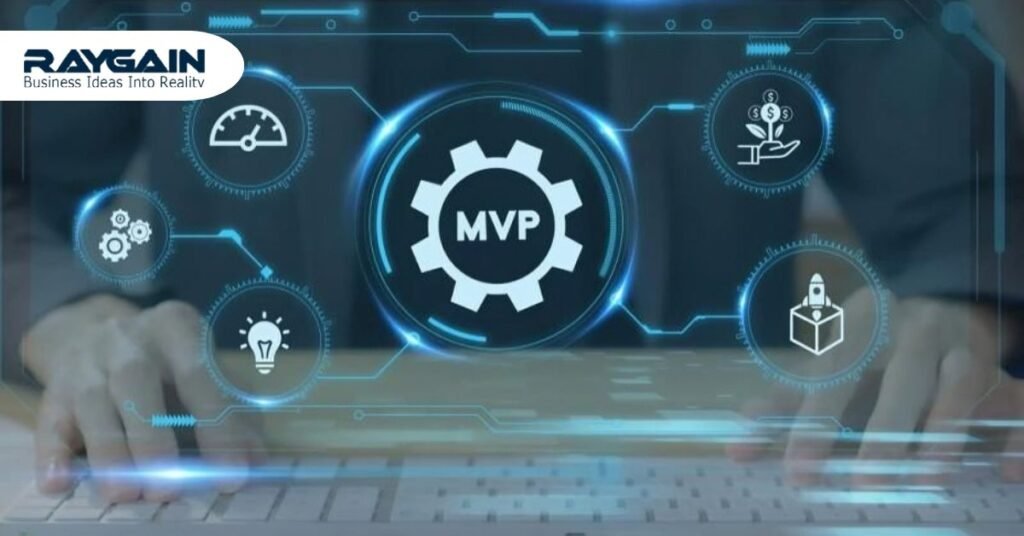
Exciting, yet risky: bringing a new digital product to life. Many startups invest months of time and huge budgets into full-scale development only to discover customers don’t want the final product. This is where MVP development services turn the game around. Instead of building it all at once, an MVP will help you quickly validate your idea, test with real users, and launch the functional version of your product within weeks, not months. In today’s fast-moving digital economy, speed-to-market and smart resource allocation are important more than ever. With Raygain’s MVP development services, founders and enterprises can turn ideas into user-ready applications faster, smarter, and with far less risk. What is an MVP, and why does it matter? An MVP is the most reduced version of your product, including only core features that solve the main problem for your target audience. Rather than build in all features that could possibly exist, you’ll launch the must-haves with just enough to collect feedback and understand what users really want. This approach allows you to: Test your concept in real market conditions Limit wastage of time and money on undesirable features. Impress early investors with a working prototype Set up a solid base for full-scale development. Iterate based on actual user behavior, not assumptions. Companies such as Airbnb, Dropbox, Uber, and Instagram all started with MVPs. Today, modern startups are greatly reliant on MVP development services for the purpose of reducing risks, hastening validation, and reaching product-market fit faster. Why MVP Development Services Matter in 2025 User expectations move swiftly. Investors would like to see traction before they fund. Competitors innovate swiftly. The longer your product takes to reach market, the chances are someone will get there first. Here’s why MVP development is essential in today’s environment: 1. Faster Time-to-Market An MVP can let you launch a functional product within weeks. This early entry into the market provides you with the real feedback and customer engagement advantage before your competition catches up. 2. Lower Development Costs Instead of building the full product, you invest only in the core features; this cuts down the upfront costs drastically while still helping you get to market early. 3. Real User Data Before Scaling Analytics and user feedback from the MVP inform your roadmap, enabling you to develop the right features in the right order. 4. Investor-Friendly Strategy Investors love validated ideas. More importantly, an MVP demonstrates traction, real usage, and clear demand—rendering your startup far more fundable. 5. Built-in flexibility In the event of a market change or shift in user preferences, your MVP can easily pivot. You are not committed to a big expensive build. That’s why companies from all over the world select MVP development services to speed up the development and decrease risks, accelerating success. Raygain’s Approach to MVP Development Services At Raygain, we go beyond development. For us, it’s not about building an MVP alone but about building the right MVP. Our framework is strongly positioned on making things faster, assuring quality, and strongly validating each decision to support your future product vision. Here’s how our process works: Step 1: Discover & Define the Core Problem Every strong product starts with clarity. We work with you to deeply understand: Your target audience The problem you’re solving Existing competitors The value your idea delivers Possible product differentiators This is the discovery phase in which we map out the minimum features your MVP will require. Step 2: Develop a Transparent MVP Feature Roadmap Instead of striving to build everything, we focus on features by using: User value Technical feasibility Market expectations Launch timelines This helps you launch faster while keeping the long-term product vision intact. Step 3: Rapid UI/UX Prototyping A great user experience is critical to success. Our UI/UX designers create: Wireframes High-fidelity designs Interactive prototypes This gives you the visual preview of your product even before the development has started. Step 4: Agile Development & Weekly Releases Our development team uses modern technologies in an agile approach, developing your MVP in fast iterative sprints. We focus on: Clean, scalable architecture High performance Secure code Mobile- and web-friendly interfaces Weekly releases ensure that you are involved and can review the progress in real time. Step 5: Testing, Quality Assurance & Optimization For a smooth launch, each MVP is put through: Functional testing Usability testing Performance checks Security validation Our focus is on delivering an MVP that feels polished, stable, and reliable. Step 6: Launch, Feedback & Continuous Improvement The true learning only starts once your MVP is launched. We track: User behavior Engagement patterns Feature adoption Early retention metrics Conversion data It helps shape future iterations and updates. Raygain’s MVP development services are designed for long-term success, not just speed of delivery. We partner with you even after launch to refine your product and guide your growth. Types of MVPs We Develop at Raygain Each idea is unique, so we provide a broad range of MVP types that are tailored for every product’s vision: 1. Web & Mobile App MVPs Perfect for SaaS products, marketplaces, on-demand services, and social platforms. 2. MVPs of Landing Pages Great for testing ideas without actually developing a feature. 3. No-Code/Low-Code MVPs Great for non-technical founders needing the quickest launch possible. 4. Prototype MVPs Interactive prototypes showing the core idea for internal validation or pitching to investors. 5. Concierge or Wizard-of-Oz MVPs Used when real operations can’t yet be automated. This flexibility gives founders, SMEs, and enterprises much-needed choices, as they can find the approach that best suits their objectives. Industries We Serve The MVP development solutions offered by Raygain cater to a wide range of sectors: Fintech Healthcare Retail & eCommerce Logistics EdTech Travel Manufacturing Hospitality Real estate Enterprise SaaS Our cross-industry experience helps us bring proven strategies into new product ideas. Technologies We Use We build MVPs with robust, scalable, and modern tech stacks like: React, Vue, Angular Node.js, Python, PHP Flutter, React Native MongoDB, MySQL, PostgreSQL AWS, Azure, Google Cloud AI/ML integration IoT and automation frameworks
Custom Software Development Mistakes That Kill Projects — And How to Avoid Them

In today’s digital world, every business aspires to smarter, speedier, and more customized solutions; hence, custom software development has become the strategic priority of companies in automating processes, enhancing customer experience, and thus giving them an edge over competitors. But while the demand is rising, not every project is a success. Actually, a lot of companies struggle with delays, cost overruns, misaligned expectations, or incomplete solutions that never deliver the intended value. And the truth is simple: most failures are avoidable. They happen because of a few common — but critical — mistakes. In this blog, we break down the major mistakes that kill custom software development projects, and we will explain how your business can avoid them to ensure smoother delivery, predictable outcomes, and long-term success. 1. Starting Without Clear Goals and Requirements One of the single largest reasons why custom software development projects fail is due to unclear requirements. Many businesses dive into the development of an idea without having a structured vision. Symptoms of unclear requirements Frequent scope changes Confusion between business and tech teams Final output not as expected. Rework, delays, and budget issues How to avoid it Begin with a detailed discovery phase. Document: Your business goals User journeys Core features Expected results Success Indicators Well-defined goals allow your custom software development team to tailor an exact solution to fit your needs. Upfront clarity saves time, reduces costs, and prevents conflict down the line. 2. Ignoring User-Centric Design Most companies build software based on what they think users want. Few stop to research real user behavior. The result is a solution that looks good in theory but fails when real-world usage becomes involved. Why this is dangerous If users find the system confusing or slow, they will resist using it. Poor adoption kills even the most feature-rich solution. How to avoid it Conduct user interviews Create user personas Map user journeys Test prototypes early Your entire custom software development process should be guided by user-first thinking. When users love the experience, software turns into an asset instead of a burden. 3. Choosing the Wrong Technology Stack A weak technology stack can limit scalability, increase maintenance costs, or shorten the lifespan of the software. Too many businesses base their technology decisions on trends, rather than actual requirements. Risks of the wrong tech stack Performance problems Integration problems High long-term costs Difficulty in hiring skilled developers How to avoid it Let your custom software development partner evaluate: Scalability requirements Security requirements Integration needs Long-term roadmap Cost of ownership A future-proof tech stack means your software evolves with your business, not against it. 4. Lack of Importance Given to Project Management Even the best developers in the world will sink without good project management. Poor coordination, ambiguity in roles, and lack of communication can bring down any project in no time. Common project management issues Missed deadlines No progress tracking is carried out. Misalignment between teams Late discovery of issues How to avoid it Effective custom software development requires: Agile methodology Structured sprint cycles Frequent reviews Transparent communication A dedicated project manager Good project management ensures that progress remains on track, and every stakeholder stays aligned. 5. Not Testing Early or Often Enough Indeed, one of the most damaging mistakes made on many projects is to delay testing until the end. Bugs found late are expensive and time-consuming to fix. Signs of Inadequate Testing Last-minute surprises Failures after Launch Repeated rework Slow performance How to avoid it Use: Manual testing Automated testing Regression testing Performance testing User Acceptance Testing (UAT) Frequent testing provides the assurance that a feature is reliable and stable. There can be no high-quality custom software development process without a strong QA process. 6. Lack of Documentation Also, teams perceive documentation as “extra work.” Poor documentation creates immense problems at later stages of the project, mainly when scaling, updating, or handovers. Why skipping documentation is harmful New developers have difficulty getting on-boarded. Bugs become increasingly difficult to isolate. System upgrades take more time Knowledge loss when team members leave How to avoid it Ensure your custom software development team: Technical documentation API documentation Architecture diagrams Deployment guides User manuals Good documentation saves time, reduces dependency, and supports long-term success. 7. Poor Communication Between Business and Technology Teams In custom software development, miscommunication is a silent killer. Rarely does the final product meet expectations when the teams are not aligned. What poor communication looks like Features misunderstood Priorities mismanaged Delays in approvals Poor feedback loops How to avoid it Hold weekly alignment meetings Use shared project dashboards Communicate transparently Document every change Clear communication guarantees that all stakeholders work toward the same vision. 8. Trying to Build Everything at Once Most companies want to pack every feature into the first version; this leads to bloated, late, and costly projects. This “big bang” approach kills momentum. Why it fails Longer development cycles Rising costs Overwhelmed users Higher risk of failure How to avoid it Adopt an MVP-first strategy: Build the core features Release to early adopters Gather feedback Improve through iterations This minimizes risks by guaranteeing that assumptions do not drive your custom software development process, but real insights by target end-users. 9. Ignoring Security from Day One Security is usually an afterthought, but it shouldn’t be. Data breaches, compliance issues, and vulnerabilities can destroy customer trust and business reputation. Common security mistakes Weak Authentication No encryption Poor API security Ignoring compliance standards How to avoid it Perform security audits Implement access controls Encrypt using best practices Follow industry regulations and standards. Security needs to be embedded in the entire lifecycle of custom software development, not an afterthought. 10. Choosing the Wrong Development Partner This is one of the most damaging mistakes: choosing a partner that lacks experience, technical depth, or a structured approach. Risks of choosing the wrong vendor Poor-quality code Missed deadlines No post-launch support Misleading cost estimates How to avoid it Assess your custom software development partner against: Experience across industries Technical expertise Strong
Managed IT Services Checklist 2025: 15 Must-Have SLAs

If you’re renewing or switching providers in 2025, the difference between average and exceptional managed IT services is written in three letters: SLA. A strong Service Level Agreement turns promises into measurable outcomes, shields you during incidents, and aligns IT with business goals. In this guide, we unpack the 15 SLAs you must demand this year-so your investment in managed IT services delivers uptime, security, and speed your stakeholders can feel. Why SLAs matter more in 2025 Hybrid work, SaaS sprawl, and rising cyber threats have made reactive support too risky. Modern managed IT services must be proactive, transparent, and continuously optimized. SLAs are how you enforce that reality: they define the metrics, reporting cadence, escalation paths, and penalties that keep your partner accountable. With clear SLAs, managed IT services become predictable, auditable, and business-aligned instead of “best effort.” The 15 SLAs you should insist on Use this checklist as your baseline. If a provider hesitates, that’s your signal to move on. • Uptime & Availability Hard commitments on critical systems (e.g., 99.95%+ for production apps), with clearly stated maintenance windows, exclusions, and financial credits for misses. • Incident Response Time Time to acknowledge versus time to engage, by severity: P1–P4. For P1, expect less than 5–10 minutes acknowledgment and immediate engagement of a senior engineer. • MTTR – Mean Time to Resolution Target ranges per incident class, with RCA delivered within 48–72 hours for major incidents. MTTR should be trend-tracked and improved quarterly. • Change Management & Maintenance Defined lead times, risk categorization, rollback plans, and blackout periods are required. Emergency changes require post-implementation review with stakeholder sign-off. • Patch & Vulnerability SLAs Cadence for OS, application, and firmware patches; timelines by CVSS score: for example, critical within 72 hours. Third-party software responsibilities should also be included. • Backup, Restore & RPO/RTO Daily (or more frequent) backups with test restores each quarter. Specify Recovery Point Objective (RPO) and Recovery Time Objective (RTO) for each system class. • Security Monitoring & MDR 24/7 detection and response supported by SLAs for alert triage, containment, and eradication. Include threat hunting frequency and timelines for breach notification. • Identity & Access Management SLA for provisioning/deprovisioning, privileged access reviews, and enforcement of MFA. Also, audit trails should be exportable for compliance. • Endpoint Management Include coverage for laptops, mobiles, and OT/edge devices where applicable. Include baselining, compliance drift remediation, and KPIs like “time to patch endpoints.” • Cloud Operations (FinOps + SecOps) SLAs for resource right-sizing, cost anomaly alerts, tagging hygiene, and policy guardrails are available. Monthly savings targets ensure the alignment of value to outcomes. • Network Performance: SASE/SD-WAN/Private 5G Latency, jitter, and packet-loss thresholds per site and application class. Include auto-failover and circuit/provider escalation procedures. • Service Desk Experience First-contact resolution rate, average speed to answer, ticket backlog limits, and satisfaction targets (CSAT). Publish deflection via self-service/AI as a positive KPI-not an excuse for slow human help. • Compliance & Audit Readiness Evidence packs, policy updates, and support for audits-e.g., ISO 27001, SOC 2, GDPR. Define response windows for auditor requests and data subject access requests. • Reporting & Quarterly Business Reviews (QBRs) Monthly KPI dashboards and quarterly roadmap sessions. Monitor uptime, MTTR, change success, security posture, and cost trending with action plans. • Penalties, Service Credits & Exit Assistance Simple credit model for SLA breaches, plus guaranteed knowledge transfer, config exports, and offboarding support to prevent vendor lock-in. How to assess a provider against this checklist A credible partner will provide historical performance against similar SLAs, and will offer to pilot their managed IT services using real metrics. Request sample reports, anonymized RCAs, and automation runbooks. During discovery, verify they can tailor SLAs by business unit or site: mature managed IT services teams segment commitments to match application criticality, compliance scope, and local constraints. Implementation tips for your contract Prioritize by impact: Link every SLA to a business outcome, such as “Every hour of ERP downtime costs ₹X”. This will keep negotiations practical and focused. Define severity precisely: A P1 in finance might not be a P1 in marketing. Document it. Make reporting self-serve: Request portal access to live SLA dashboards so you don’t have to wait for end-of-month PDFs. Align the incentives: Credits are good; continuous improvement plans are better. When possible, bake in quarterly target raises within your managed IT services scope. What great providers add in 2025 The best-managed IT services teams bring automation, AI-assisted operations, and cross-domain visibility. Expect: AI-assisted ticketing: Auto-triage and enrichment shorten MTTR without hiding problems. Proactive hygiene: drift detection, policy enforcement, and “fix-forward” changes that reduce repetitive incidents. Business-level SLAs: Not just “servers healthy, ” but “order processing time < X seconds, ” making IT success visible to the CFO. Common pitfalls to avoid Vague exclusions: “Acts of third parties” cannot be a loophole. If SaaS or ISP issues affect you, define how the provider will escalate and communicate.No RCA deadlines: Without them, learning stalls. Fix that in the SLA.One-size-fits-all targets: Multi-site and hybrid stacks require tiered targets. Push for SLAs per system class, not blanket numbers across all managed IT services. Copy-paste RFP language you can use Managed IT services shall be provided by the Vendor, along with monthly KPI dashboards, QBRs, and 24/7 security monitoring. Minimum 99.95% availability for Tier-1 systems. P1 incidents: TTA ≤ 10 minutes; senior engineer engagement immediately; RCA within 48 hours. Critical vulnerabilities remediated within 72 hours. Backups are verified quarterly via test restores. Failure to meet SLAs results in service credits as specified. Why Raygain Raygain designs managed IT services around measurable outcomes: fewer incidents, faster recovery, and lower total cost of ownership. Our approach blends 24/7 operations with AI-assisted workflows, strong security baselines, and QBRs that translate technical metrics into business decisions. Whether modernizing a multi-cloud estate, securing distributed teams, or connecting OT on Private 5G, we align SLAs with what matters: uptime, performance, and compliance. Your next steps Map business systems by criticality: Tier 1–3 and attach the relevant SLAs from this checklist.Request sample reports