
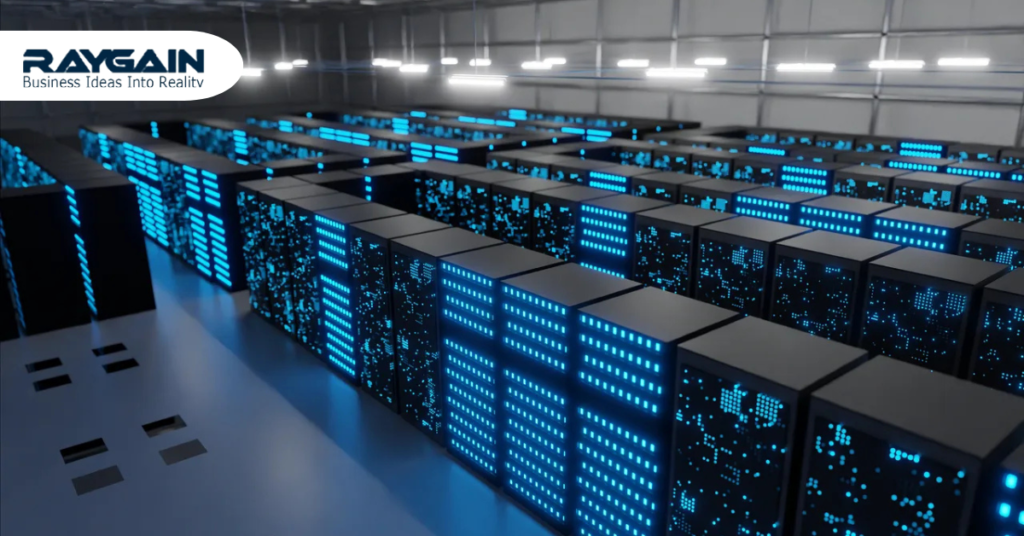
Data centres are the one powerful and yet frequently misunderstood infrastructure in the present day hyperconnected world because every click, stream, transaction, and automation process is reliant on them. With the transition to cloud ecosystems, AI-based operations, and real-time analytics, data centres are not merely storage centres anymore, they have transformed into smart high performance digital engines that bring global innovation.
The contemporary data centres are structured to process data of huge quantities with speed, efficiency, and security. Being used to drive enterprise applications as well as support new technology, such as IoT, machine learning, and private 5G networks, they are essential in the creation of undisrupted digital experiences. The need to have scalable and resilient data centre solutions has been increasing faster than ever as industries continue to be digitized.
________________________________________
The Digital Age of Data Centres Evolution
Gone are the days when the traditional data centres were considered as big rooms with a number of servers. The current data centres are very advanced facilities that have well-developed cooling systems, automation software and smart monitoring. Due to the emergence of hyperscale data centres and edge computing, the businesses can now process the data nearer to the source, thereby reducing latency and enhancing performance.
One of the greatest contributors to this change has been cloud computing. Companies are moving towards using hybrid and multi-cloud models, which complicates data centres and makes them more distributed. This change allows the businesses to dynamically scale the operations as well as being able to control important workloads.
________________________________________
Performance Meets Intelligence
The fact that modern data centres can incorporate intelligence in operations is one of the distinguishing characteristics of such a data centre. The AI-based monitoring systems will be able to predict failures in the hardware, optimize energy use, and provide a seamless performance. Automation has greatly minimized the manual intervention that would otherwise involve the IT teams in maintaining the system as opposed to projecting strategic projects.
Another important area that is transforming the capabilities of the data centres is high-performance computing (HPC). Healthcare, finance, and manufacturing industries are some of the industries that require the use of HPC to perform complex simulations or conduct a data analysis to make real-time decisions. This is the reason why data centres have been developed not only in terms of power but also efficiency.
________________________________________
Security at the Core
Cross-border security has taken a center stage in the priority list as cyber threats continue to be more advanced. The present data centres are designed with multi-layered security infrastructures including physical security provision, network protection and advanced encryption methods. Zero-trust architecture is also becoming common where all access requests are authenticated and permission is then granted.
Sovereignty and compliance of data are also important issues. As the regulations gradually tighten, business organizations should make sure that data storage and processing do not violate local regulations. This has grown to use regional data centres that serve regional needs.
________________________________________
Green Data Centres and Sustainability
Data centres have been worrying about energy consumption. The industry is however fast shifting towards sustainable practices. Green data centres are very energy efficiency oriented, they use renewable energy sources and are very innovative in cooling technology so that they are less harmful to the environment.
Both tech giants and enterprises are spending on carbon-neutral data centres. Liquid cooling, artificial intelligence-based energy optimization and modular infrastructure are aiding to minimize the use of power with effectiveness (PUE). Sustainability is no longer a choice feature rather it has become one of the distinguishing features of businesses that aim at keeping up with the global environmental aspirations.
________________________________________
Edge Computing: Data Where It Counts
Due to the emergence of real-time applications, including autonomous vehicles, smart cities, and industrial automation, the requirement to have low-latency data processing is now critical. This challenge is met by edge data centres which will bring computing resources to the end user.
This decentralized framework enhances performance as well as lowers the bandwidth bill and increases reliability. The edge computing is especially useful to the travel and transportation sector, and the manufacturing industry, where real-time decision-making is a necessity.
________________________________________
The Data Centre role in Transformation of industry
Industries are fast becoming digital and the centre of this transformation is the data centres. The use of data centres in industrial automation such as real time monitoring, predictive maintenance and smooth connectivity between the systems is achievable. Integration of 5G networks with data centres by the privates is also increasing the efficiency and reliability of operations.
Innovation in the form of smart factories, connected supply chains, and data centres are becoming a reality. They offer the platform upon which sophisticated technologies may be supported as well as a smooth operation of intricate ecosystems.
________________________________________
Next Generation trends in Data Centres
Some of the emerging trends that are influencing the future of data centres are:
Smart Infrastructure: Smart systems will keep evolving to the point of optimizing the performance and lower operational costs.
Modular Data Centres: drut implementation and scalability will be common.
Quantum Computing Integration: ydio is still in its infancy, there is a potential of a quantum leap in data processing.
Improved connectivity: The integration into 5G and the future network will open up opportunities.
Autonomous Operations: All the data centres will be fully automated.
These tendencies refer to the current transformation of data centres as fixed infrastructure to dynamic, smart ecosystems.
________________________________________
Conclusion
The role in data centres is no longer merely the backbone of the IT infrastructure but the basis of the digital economy. The work of data centres will continue to become more important as businesses keep on innovating and implementing new technological approaches. The success of digital transformation initiatives in industries will be determined by the fact that they were able to provide performance, security, scalability, and sustainability.
In the data-driven world, the modern, smart data centre solutions are not merely the choice of technology, but rather the strategic need.