It is no longer the machine that runs factories. They operate on data, data intelligence, and accuracy. Automation in industry does not only involve substituting the manual processes. It is also concerned with creating smart ecosystems in which machines can talk with each other, decisions can be made in milliseconds and operations can develop without human intervention. The competitive advantage is being found not only in scale in the modern world, but in automation maturity. Industrial automation is revolutionizing manufacturing, logistics, energy, pharmaceuticals, automotive, and even food processing industries on a fundamental level, via predictive production floors, AI-driven quality control, and so on.
The Change of Mechanical Efficiency to Intelligent Efficiency
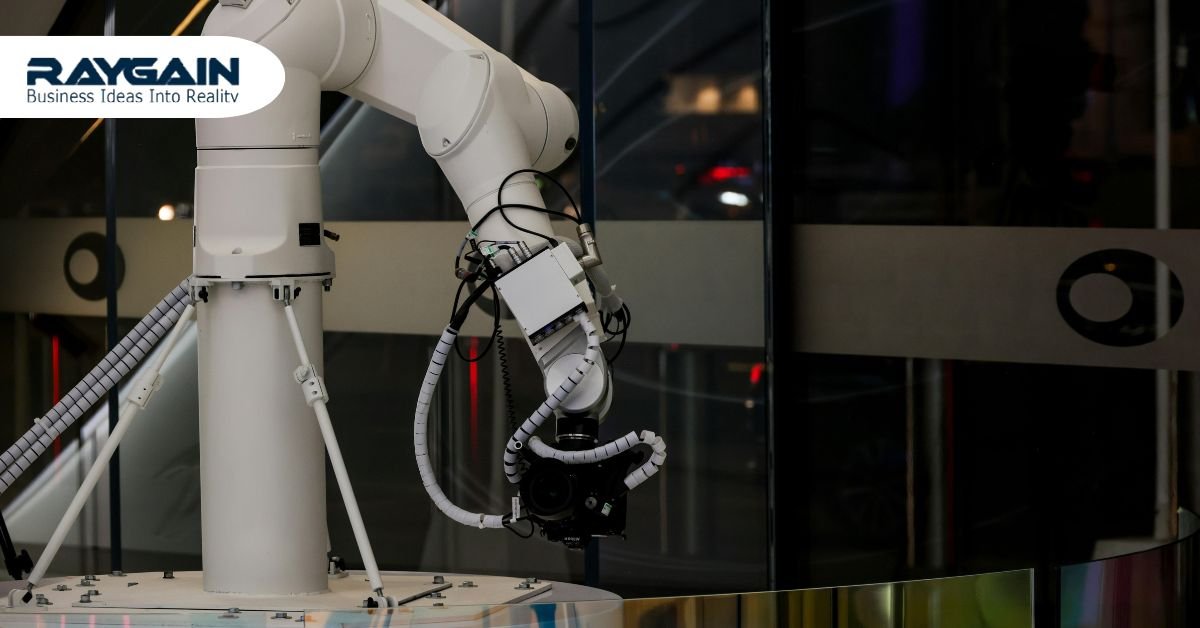
In the past, automation was concerned with mechanical consistency. Conveyor belts moved faster. Welding was done by robotic arms which were more precise. Repetitive logic was controlled by PLCs.
In modern-day industrial automation systems, it is a combination of:
• Smart sensors
• Edge computing
• Industrial IoT (IIoT)
• SCADA systems
• AI-driven analytics
• Live production control boards.
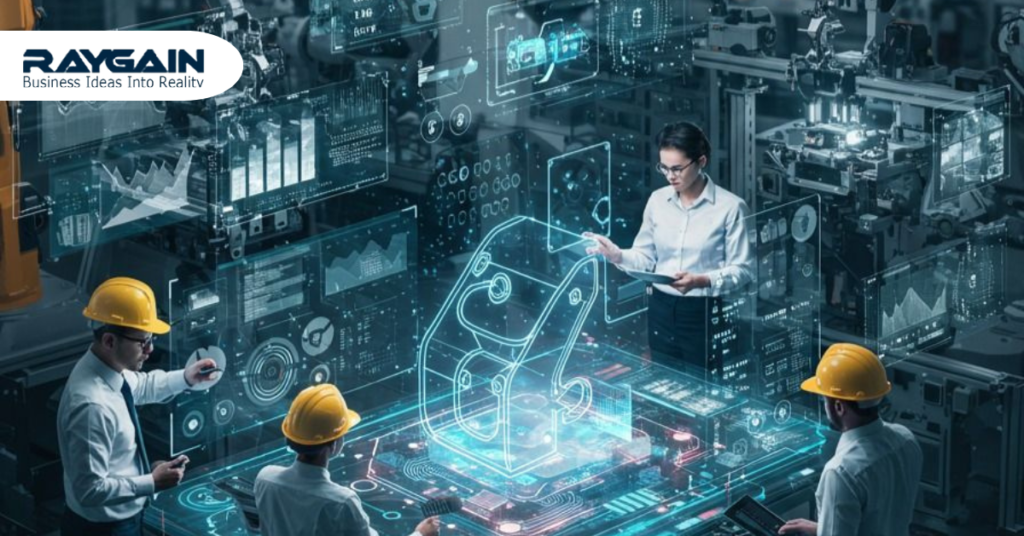
This has changed the focus in favor of doing things smarter instead of faster. Contemporary automation systems gather data on operations at a rate of one second. It is that data which forms the basis of optimization, predictive maintenance, and intelligent forecasting. The production floor has now been turned into a moving data center.
Information as the Key Backbone
At high performing automated plants, data is not an out-byproduct it is the foundation. In the case of Industrial IoT solutions, machines relay performance metrics on a continuous basis:
• Temperature variation
• Energy consumption
• Machine vibration
• Downtime frequency
• Output variance
This constant monitoring allows predictive algorithms to tell about micro-failures in advance to avoid breakdowns. A machine is no longer waiting to break down. It signals early. This is where predictive maintenance in industrial automation is able to measure ROI:
• Reduced unplanned downtime
• Extended equipment life
• Efficient spare part stock.
• Lower maintenance costs
The factory floor awakens to himself.
Working with, and not replacing, humans
Industrial automation does not make man stupid, it makes him smarter. Robots approach technicians and collaborate with them now known as cobots. Valve manipulation is not manually done but by operators who oversee dashboards. Engineers do not face breakdowns they have to troubleshoot on a daily basis but look at the trends.
The position of the workforce will change:
• Mechanic to automation manager.
• Maintenance worker to Reliability analyst.
• Production planner to data-driven strategist.
Automation displaces work with monotonous work to work that involves decisions. This shift is pushing the need to acquire competencies in:
• PLC programming
• SCADA development
• Robotics integration
• Industrial cybersecurity
• Manufacturing data analytics.
The services in industrial automation are paying more attention to digital transformation of skills as well as installing equipment.
Precision as a Competitive Strategy
Microscopic tolerances in such industries as pharmaceuticals and semiconductor manufacturing are necessary. Even the minor deviations affect the quality of the products. Automation systems of processes guarantee:
• Constant environmental conditions.
• Finished goods production that is standardized.
• Automated accounting of compliance.
Industries that are heavily regulated enjoy traceable and automated records that minimize compliance risk and complexity of auditing. Precision is no longer the art of a hand. It consists of algorithmic consistency.
Energy Optimization and Industrial Automation
Energy efficiency has become a strategic measure. Energy management systems are automated and watch:
• Power factor
• Peak load demand
• Live monitoring of energy consumption.
• Idle machine drain
Through complete industrial automation systems, factory dynamically respond to varying loads of energy utilization during non-peak periods, implement motor speed optimization in VFDs, and automatic shutdown of idle machines. This helps in cutting the costs of operation and meets sustainability objectives. Smart factories are not only energetic but also smart.
Intelligent Manufacturing Systems
Competitive organizations are also not establishing isolated systems but rather are establishing end to end automation ecosystems. This incorporates integration in:
• ERP systems
• Manufacturing Executive Systems (MES)
• Supply chain platforms
• Warehouse automation
• Quality control systems
When ERP production planning is linked directly with the automated assembly lines, production is aligned with demand. Up to date supply chain visibility saves excess stock and enhances delivery commitment. Automation is no longer confined to the production unit, but links the whole business.
Industrial Cybersecurity: The Unspoken Pillar
With the growth of automation in industries, the attack base increases. Remote monitoring and cloud-integrated SCADA systems as well as connected PLCs have to be secured against:
• Ransomware
• Data breaches
• Operational sabotage
• Network intrusions
Cybersecurity of industries has become a serious aspect of automation architecture. The secure networks in the industrial setting need:
• Separated OT and IT infrastructure.
• Secrecy protocols of communications.
• Role-based access control
• Consecutive vulnerability surveillance.
Unsecured automation is risky to operations. Rigorous automation creates strong businesses.
Quality Intelligence Driven by AI
Computer vision systems are being used more to inspect quality. AI-powered cameras detect:
• Micro defects
• Surface inconsistencies
• Dimensional errors
• Assembly misalignments
The AI systems get better as they are exposed to a larger amount of data as compared to manual inspection. The accuracy of detection of defects and the rate of rejection reduce with time. This leads to:
• Lower product recalls
• Reduced rework costs
• Improved brand reputation
Industrial automation through artificial intelligence is transforming the quality standards.
Scalability Nondeterministic Infrastructure Explosion
The conventional growth demanded physical growth – new plants, additional man power, additional levels of supervision. By means of digital automation models:
• Optimization of capacity can be in current infrastructure.
• New product variants can be reprogrammed to production lines.
• Time loss on changing between transitions is minimized.
Flexible manufacturing systems enable industries to be responsive to the changing market demand without incurring huge capital investments. Agility is provided by automation in a scalable way.
Emergence of the Self-managed Factories
In the world, we are moving into the age of partially autonomous, as well as completely autonomous manufacturing spaces. In these environments:
• Demand forecasting is an auto-adjust production schedule.
• Components are ordered automatically by machineries.
• Predictive alerts cause maintenance.
• Inventory is real time updated.
The time taken to make a decision reduces to days to a few seconds. The Industrial automation solutions are currently integrating robotics, AI, machine learning, and cloud computing into harmonized platforms of operational intelligence.
Industrial Automation as a Growth Multiplier
Prospective businesses do not view automation as a cost-cutting solution anymore. They view it as:
• A revenue enabler
• A risk reduction mechanism
• Competitive differentiator.
• A scalability engine
Organizations that make investments in smart automation systems can:
• Launch products faster
• Ensure quality on a regular basis.
• Minimise operational volatility.
• Enhance customer satisfaction.
The maturity of automation is emerging as an industrial leader.
The Strategic Outlook
Industrial automation is focused on the future centred around:
• Edge computing to make decisions faster.
• Machine connectivity at 5G.
• Autonomous Systems based on AI.
• Digital twin simulations
• Smart factories that are hyper-connected.
The society is changing in an industrial manner. Firms that develop a cohesive, smart, safe automation environment today will take over the manufacturing world tomorrow. Automation of industries is no longer an engineering role in the background. It is the digital backbone of the contemporary industry.