
The industrial world is changing fast with organizations shifting to the use of digital technologies to enhance productivity, visibility of their operations, and reliability of their systems. This transformation has included the industrial automation as one of its themes, whereby industries are able to interlink machines, processes, and data in a single operational ecosystem.
Automation technologies are being extensively applied in manufacturing plants, logistics centers, energy plants, and networked infrastructure to optimize the working process and ensure a high level of the quality of its production.
The rise of industrial automation industries in the global front is a sign of the rising need of the intelligent industrial systems. Firms are no longer left to supervision manually or using single-purpose machines. Rather, they implement platform-based automation that enables real time monitoring, predictive maintenance and process optimization.
Industries would be able to run round the clock with precision and the operational risk would be minimized through automation structures.
Large-scale industries usually partner with a dedicated industrial automation firm that has an idea about the intricacies of the industrial processes on a large scale. These firms develop customized automation systems that combine hardware and software with communication protocols in a single coordinated system.
The automation vendors usually operate in various industrial fields such as automobile industry, pharmaceutical industry, chemical industry, food industry and energy industry.
________________________________________
Modern Facilities Automation Architecture
A modern day industrial automation system is generally a complex of several layers of technology which interact to manage and monitor industrial processes. With these layers, a digital ecosystem is formed in which performance of equipment, production indexes, and data on operations are constantly synchronized.
Some of the major elements of automation solutions are:
• Programmable Logic Controllers (PLC): Industrial controllers that are used to control machinery and automated processes.
• Supervisory Control and Data Acquisition (SCADA): Systems that enable remote monitoring of the processes in the industry.
• Human Machine Interface (HMI): The Human machine interface enables the operator to interact with the automated system.
• Industrial Sensors and IoT Devices: IoT devices that monitor real time data of machines and production lines.
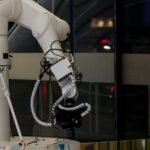
• Industrial Robotics: The automated robotic systems are used in assembly, packaging, welding, and handling.
• Machine vision Systems: Visual inspection technologies: control systems that are based on visual inspection.
These technologies provide a systematic automation platform of the industry with which production lines may work efficiently and with high standards of operation.
________________________________________
Integration between Production Ecosystems
The possibility to connect different systems to a single working platform can be counted among the significant progresses related to the industrial automation.
A lot of automation providers in the industry focus on the integration of old machines with new digital technologies. With this integration, older equipment is able to be used in sophisticated automated systems without necessarily having to be replaced with complete systems.
Frequently, industrial plants have several production systems running at the same time. These systems are not easily managed without the application of automation.
An expert industrial automation firm has the ability to combine the software of production, control systems, and monitoring platforms to establish a smooth network of industry.
This integration will help industries to:
• Track the performance of the machines.
• Identify anomalies in operations fast.
• Maximize production schedules.
• Reduce unplanned downtime
• Enhance the efficiency of the total equipment.
With the adoption of smart manufacturing by industries, there has been the need to have integrated automation systems which are needed to keep things stable.
________________________________________
Industrial Operations that are Data-Driven
Information is now an important asset in the contemporary industrial setting. Modern automation systems in industries can gather a huge amount of operational data on machines, sensors, and production systems.
This information can be studied to determine performance patterns, anticipate maintenance needs as well as enhance production scheduling.
Favoring the assistance of automation technologies, industries will be able to put in place predictive maintenance strategies. Rather than allowing machine breakdowns, automatic monitoring systems observe warning signs and signal the maintenance teams.
This minimizes unplanned downtimes and assists organizations to have constant production cycles.
Quality control is also improved through data-driven industrial automation. There are machine vision systems and automated inspection technologies that make sure that products have passed the required standards on manufacturing.
Such accuracy allows the industries to be standardized and minimize wastage in production.
________________________________________
Automation in the Influence Inspirations
There have been various industries that are adopting automation technologies and each comes with its operational demands. The major industrial automation vendors come up with dedicated solutions specific to industries.
Manufacturing Industry
Automation is applied in manufacturing plants in assembly lines, robots that do welding, packaging systems, and quality inspection. Automated production systems have enhanced speed in production and at the same time are accurate and repeatable.
Energy and Power Sector
Automation systems are needed in power plants and energy infrastructure to deal with complex electrical networks. Automated power distribution systems guarantee constant power production and effective energy supply.
Pharmaceutical Industry
The automation method provides accuracy during the pharmaceutical manufacturing operation like the mixing, packaging, and labeling. Strict adherence to regulatory standards is also assured by automated monitoring.
Food Processing Industry
Automation involves food manufacturing plants handling ingredients, packaging, temperature control and hygiene control. The automation enhances the production and food safety.
________________________________________
Industrial Automation Services Role
Automation systems need special technical skills. Here, professional service providers of industrial automation take a significant role.
The services provided ensure that the automation systems are installed, configured and maintained to last long before they come to a stop.
A complete industrial automation service can contain:
• Design and engineering of the automation systems.
• Control systems and sensors installation.
• SCADA system development
• Industrial network setup
• Commissioning, system testing.
• Constant maintenance and support.
Service and maintenance can be done regularly to ensure that automated systems remain efficient as the industrial requirements change.
________________________________________
Digital Industrial Transformation and Automation
The automation of industry has become a part of the bigger project of digital transformation. The modern automation systems are getting increased by technologies like Industrial Internet of Things (IIoT), artificial intelligence, and cloud-based analytics.
Intelligent analytics is an important component of many industrial automation solutions provided by companies today.
The technologies enable industries to process operational information, predict production patterns, and maximize the use of resources.
Organizations are also able to remotely monitor the operations of industries through cloud-based automation platforms.
System dashboards are available to the plant managers and engineers either in centralized control centers or distant sites.
Such accessibility enhances flexibility in operations and quickness in decision making.
________________________________________
Automation in the Future of Industry
Industrial automation is being influenced by developments in smart robotics, machine learning, and connected industrial ecosystems in the future.
Factories are slowly turning into highly automated spaces, in which machines can communicate with one another and adapt to the adjusting production needs.
Collaborative robots are also called cobots, and they are increasingly becoming popular in contemporary manufacturing setups.
The robots are used to enhance efficiency in the workplace by working with human operators and ensuring the safety of the workplace.