
Change is no longer gradual in the current fast changing industrial world because it is a constant factor. Competitiveness in the market is increasing, customer demands are increasing and operational effectiveness has emerged as a major point of distinction. Throughout all of this, digital transformation is at the core of this transformation, a strategic shift that allows industries to modernize business processes, create new value, and keep up with a world that is increasingly technology-driven.
Digital transformation does not merely entail the use of new tools or software. It is an integrated strategy that involves the incorporation of digital technologies in all functions of an industrial organization and has fundamentally altered the mode of operation, provision of value, as well as responsiveness to market dynamics.
Making sense of Digital Transformation within an Industrial environment.
In the case of industries, digital transformation is the integration between operational technology (OT) and information technology (IT). It is the process of linking machines, systems, data and people to produce smart, responsive and scalable processes.
An effective digital transformation plan aims at increasing efficiency, visibility, and creating more intelligent decision making. The move toward digitization of processes and the use of real-time data would enable industries to transition to their traditional and isolated operations to connected and intelligent ecosystems.
This change is especially important to the manufacturing sector, energy sector, logistics, utilities, and telecommunications sector, where a minor inefficiency can lead to huge losses.
The reason why digital transformation is necessary to industries.
The modern day industries are experiencing an extensive array of issues- high cost of production, machine failure, supply chain failure, labor shortage, and new regulatory demands. These problems cannot be effectively handled in traditional operating models.
The digital transformation provides an organized means of getting past these drawbacks. It allows industries to keep track of the operation at real-time, anticipate failures before they happen, and streamline the processes on a continuous basis.
Organizations obtain real-time information on actionable data instead of using manual reporting and being delayed on insights. More to the point, digital transformation assists industries to be resilient. With a volatile international world, digitally mature organisations have a greater chance of adjusting to disruption, scale, and continuity.
The Digital Transformation Business Value.
Digital transformation has much more than the technological advancement. When properly done, it provides actual business results:
Enhanced Operational Productivity.
Robotization and computerization minimize human involvement, errors, and increase speed of production cycles. This results in a stable production and increased resource use.
Enhanced Decision-Making
Developed analytics and dashboards will enable leaders to make decisions based on the actual performance data and not assumptions as they are more informed and quicker to make.
Cost Optimization
Predictive maintenance, energy management and the efficient use of assets allow to cut down the costs and also eliminate unexpected downtime.
Workforce Enablement
Digital tools give the employees a superior visibility and collaboration. Augmented systems do not require human labor and enhance productivity.
Scalability and Agility
The digitally transformed operations are able to grow fast to satisfy the market demand without significant changes in infrastructure, which is useful in the long-term growth.
Creating Digital Transformation: Smart Factories.
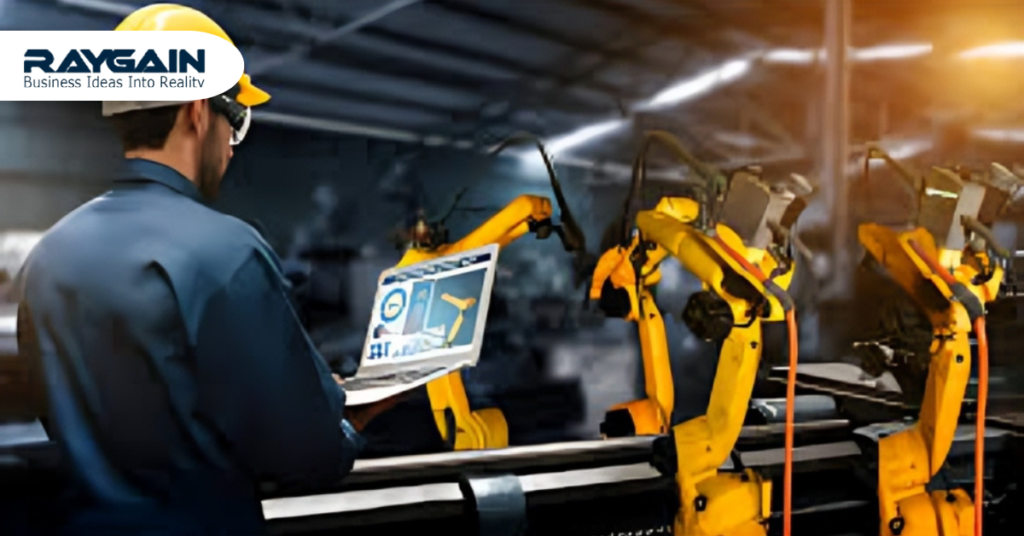
Manufacturing is the industry that would benefit the most due to digital transformation. The digital transformation in manufacturing is aimed at the development of smart factories where machines, systems, and people are closely related.
The manufactures are able to monitor production in real-time, implement quality control automatically, and predict maintenance through the use of IoT sensors, manufacturing execution systems (MES) and artificial intelligence, as well as cloud-based solutions.
A smart manufacturing can facilitate:
- Minimized downtime with condition based monitoring.
- Better quality of the product through inspection with AI.
- Demand responsive production lines.
- Improved Supply Chain visibility and traceability.
Through manufacturing digital transformation, firms will be able to shift away their reactive models of production and move to intelligent and self-optimizing ones.
The Process of Digital Transformation in Industries Why it is needed.
The industrial innovation is increasing. Companies that take time to go digital see the risk of falling behind as other companies that are already utilizing the power of data-driven operations and automation.
The first movers in digital transformation enjoy a great competitive edge since they:
- Reducing time-to-market
- Enhancing customer satisfaction.
- Enhancing transparency of operations.
- Infrastructure development to the future.
Moreover, with the rise in rules and sustainability demands, digital systems can assist industries in keeping track of their adherence, waste alleviation, and environmental achievement with a greater degree of efficiency.
Collaborating with partner digital transformation firms will provide assurance that the industry embraces the appropriate technologies and at minimum risk is reduced. These firms also provide industry knowledge, established models and industry solutions that can scale at the desired level.
Digital Transformation Company Role.
Digital transformation is not simple, but needs to be combined with strategic planning, technical skills, and knowledge of the industry. At this point the companies of digital transformation come in.
They help industries:
- Determine the level of digital preparedness and maturity.
- Establish a precise digital transformation strategy.
- Choose the suitable technologies and platforms.
- Introduction and assimilation of solutions.
- The digital initiatives should be optimized and scaled over time.
Through the collaboration with the appropriate provider, industries will be able to speed up change without going through the usual traps, like disjointed systems or conflicting investments.
Digital Transformation Services: Strategy to Implementation.
End to end digital transformation services are provided across all the transformation phases. Such services guarantee that online efforts are consistent with the business objectives and provide quantifiable value.
The most important digital transformation services are:
Digital Evaluation and Strategy.
Analyzing the current systems, assessing the gaps, and creating a roadmap that is associated with business goals.
Process Digitization
Automating manual and legacy processes to become more efficient (digitized).
Implementation of industrial IoT.
Connecting the machines, sensors, and assets to facilitate the real-time monitoring and data collection.
Data Analytics & AI
Predicting results and maximizing operations with the help of superior analytics and artificial intelligence.
Cloud & Edge Solutions
Implementing scaled systems that maintain a safe storage of data, processing and accessing data remotely.
Continuous Optimization
Observing performance, optimization of systems, and expansion of solutions as the business requirements change.
Best techniques to adopt digital transformation in Industries.
A successful implementation of digital transformation must take a planned and gradual process:
- State Specific Business Goals.
Begin with a specific objective like minimization of downtimes, quality improvement or productivity. These should be goals supported by technology and not led by technology. - Establish a Compelling Digital Transformation Strategy.
A sound plan aligns individuals, procedures and technology. It gives priorities, schedules and achievement measures. - Concentrate on areas of core operations.
Transformation initiatives should be expanded with high-impact areas like production, maintenance, quality, or the supply chain. - Digital transformation is based on reliable data.
Make machines, systems, and platforms interoperable. - Get Married to Reliable Professionals.
Connect with established digital transformation firms that are knowledgeable about operational issues and the industrial setting.