
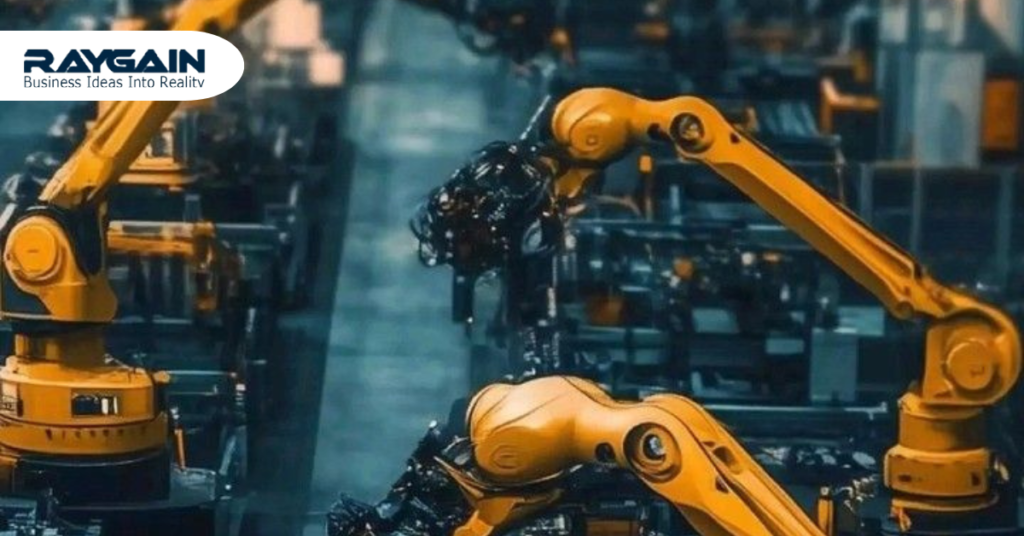
The leeway in the manufacturing environment in the modern world has never been smaller. The set of pressures on the heads of plants and CTOs are compounded by unstable energy prices, escalating shortages of skilled labor, intense regulatory compliance, and the insatiable appetite of the demands of the shorter production cycle. Such issues have changed the debate on the topic of automation in industries form a nice-to-have technology upgrade to a fundamental part of strategic operational excellence.
To B2B decision-makers, it is not only about replacing manual tasks anymore; it is about creating a strong and stable data-driven ecosystem that would ensure consistency, safety, and profitability.
The Shifting Strategy: Finding the Automation Opportunities
Operation excellence starts with clinical evaluation of the production floor. The implementation of an industrial automation service cannot be done in a blanket fashion, but rather focused at particular inefficiencies.
Strain Repetition and Bottleneck Analysis
Processes that generate traffic jam in the production line are the initial ones to be automated. When the thruput of the whole plant is being determined by a manual palletizing station, or a high-speed sorting operation, then it is a clear ROI prospects of robotics or automated conveyor systems.
Quality-Critical and Safety-Sensitive Processes
Any operation in which human fatigue causes an error of up to 2 percent and 5 percent is a threat to the brand. Equally, high-heat, chemical, or heavy-lifting conditions are main areas of intervention. Automation of these areas does not only enhance safety, but also stabilizes the Mean Time Between Failures (MTBF) and makes sure that quality is not affected by shift shifts.
Fundamental Uses of Industrial Automation in the contemporary Plants
To shift the needle on operational excellence, companies have to implement automation on various functional levels of the company.
Process and Line Control Production
A combination of PLCs (Programmable Logic Controllers) and SCADA enables the live change of production parameters. With process industries (like chemicals or oil and gas) Distributed Control Systems (DCS) are used to control complex loops that human operators can not observe with the same level of detail.
Intralogistics and Material Handling
Transportation of raw materials and finished good is frequently a cost center that is not visible. Implementing Autonomous Mobile Robots (AMRs) or Automated Storage and Retrieval Systems (ASRS) the companies cut the transit time and decrease the number of touches, saving the risk of damaged products directly.
Automated Quality Inspection
Artificial intelligence-driven vision systems have the ability to scan thousands of products a minute with sub-millimeter accuracy. Such detail inspection is mandatory towards industries such as electronics and pharmaceuticals that inherently require traceability and zero-defect requirements as a no-go zone.
What is the Right Time to Invest?
The timing of the investment is critical as the technology itself. According to the major automation firms, one should seek certain business indicators that signify the inability to keep maintaining a manual process:
Scaling Production: Production has reached a level where demand is high, and your current headcount cannot produce without overtime.
High Rejection Rates: Once “scrap cost” starts causing a significant decline in the gross margin.
Regulatory Evolution: New compliance regulations that demand the use of digital records and batch traceability that is inaccessible on a manual basis.
Workforce Scarcity: When the lack of skilled technicians becomes the main halt of the business development.
The Importance of a Service of industrial automation
Another trap that many manufacturers fall into is that they want to piecemeal an automation strategy. It is in this case that the value of a professional industrial automation service is maximized.
Design and Interoperability in systems
Specialist consultants do not merely sell hardware, but they develop architectures in which the PLC on the docking room integrates effectively with the ERP (Enterprise Resource Planning) system at the front office. This communication to the clouds is the foundation of operational excellence.
Commissioning is considered the most perilous stage of any automation project. What involves the integration of robotics and sensors is done by experienced service providers who make sure that the new systems will not interfere with the current workflow. Moreover, they offer the long-term maintenance and firmware updates to avoid the digital obsolescence.
The process of de-risking the ROI by the Professional Automation Companies
Cooperation with well-known automation firms converts a capital investment into an asset. These partners are risk mitigating by:
Industry-Specific Templates: They carry over tribal knowledge of similar deployments in your particular vertical, so the configuration mistakes of a rookie do not occur.
Simulation and Digital Twins: Before the first bolt is turned, the automatic line can be simulated by the engineers to predict the throughput and detect possible physical collisions.
Measurable Outcomes: They change the emphasis on uptime into OEE (Overall Equipment Effectiveness), which gives the dashboards required to demonstrate the investment effect on the bottom line.
Strategic Results: More Than Just Simple Productivity
With the proper application of industrial automation the returns are seen trickling down to the very core of the competitive advantage of the business:
Improved Throughput: Machines do not have mid-afternoon lapses, and thus, the output at 3:00 AM is the same as at 9:00 AM.
Energy Optimization: For automated systems, it is possible to optimize the speed of the motor and heating elements on the fly, decreasing the carbon footprint and utility bill of a facility by a significant margin.
Data-Driven Visibility: There is a creation of a digital breadcrumb trail by automation. It enables operations managers to shift towards firefighting to optimization.
Industry-Specific Use Cases Industry Main Automation Use Strategic Benefit
Pharmaceuticals Serial and batch control and packaging Complete compliance and risk of contamination mitigation.
Food & Beverage Sorting and thermal processing at high speed Taste profiles and long shelf life.
Automobile Robotic welding machines and AGV assembly lines High-level customization (Mass Customization) on a large scale.
Warehousing ASRS and automated picking The need to fulfil e-commerce fast.
Preparing to the Future: Smart Manufacturing and IIoT
It is not a robotic arm at the end of the road to operational excellence. We are going through a Smart Manufacturing era when the industrial automation service of the future is centered on the Industrial IoT (IIoT) integration.
Future-ready plants already tend in the direction of Predictive Maintenance where sensors are used to interpret both vibration and heat signals in order to anticipate a motor failure weeks in advance. The next frontier is this move towards automated-to-autonomous, where the AI-based decisions enable the self-correcting and optimization of systems without the human factor.
Conclusion: Operational Enabler Automation
Automation of industries does not take away human talent, it multiplies it. By eliminating the repetitive, risky, and high-precision tasks of the labor force, corporations enable their employees to devote their time to high-value problem-solving and innovation.
As the ultimate operational excellence is achieved, it needs a mixture of clear internal strategy and technical expertise of the best automation companies. With an option of a holistic industrial automation service, the manufacturers are in a position to guarantee that their process towards their automated future is smooth, scalable, and most crucially profitable.