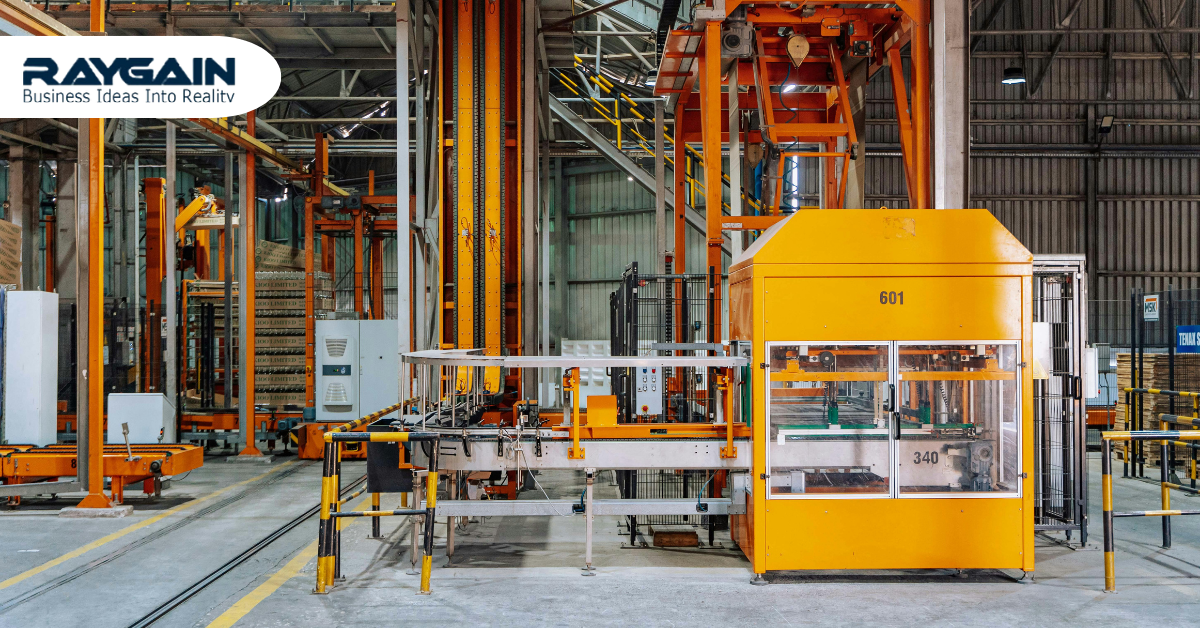
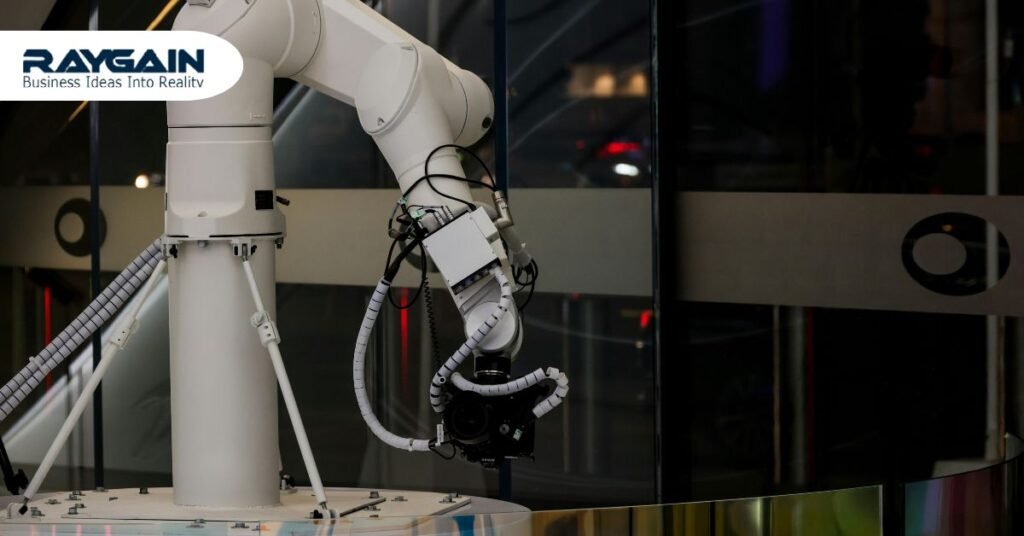
The industrial industries are undergoing a major change due to the adoption of sophisticated technologies that are redefining the work environment and working processes. Industrial automation has become a strong force that will help industries enhance productivity, operational precision, and manufacturing acuity. In the contemporary manufacturing plants, the use of automated systems is becoming common to handle the complex flow of the process, to simplify the production cycle, and to retain high efficiency standards.
Companies in various industries are investing in automation technologies to build interrelated industrial communities in which machines, information, and control systems are in a harmonious harmony. Such automated environments help to maintain a round-the-clock control, make decisions based on the data, and provide operational performance, which eventually contributes to the competitiveness of industrial businesses.
________________________________________
The Emergence of Smart Industrial Systems
The industrial environment is changing in the form of the traditional, mechanical production settings to digitally interconnected domains of operations. The key driver behind this change is industrial automation that is able to merge machinery, software platforms and digital communication networks into one system.
Automation systems in the manufacturing facilities enable the companies to control and monitor activities in real time. It is possible to track equipment performance, measures of production, and efficiency through centralized digital platforms. Such visibility helps organizations to see the inefficiencies, enhance productivity and to sustain smooth operations in the industrial activities.
Automation also enables industries to have responsive production systems which respond to the ever changing demands of the market. The digitally connected infrastructure and the factories with programmable control systems allow making some adjustments in the operational parameters, the production schedule, and the performance of equipment without significant disruptions.
________________________________________
Fundamental Technologies behind Industrial Automation
The industrial automation depends on a set of both sophisticated hardware and smart software technology which offers machines to achieve high precision and reliability at work.
The PLCs or Programmable Logic Controllers are general control systems designed to allow end-users to program certain functions onto the physical hardware.
Programmable Logic Controllers (PLC)
PLC systems are the main control device in an automated industry. These are controllers that control the actions of machines, regulate the production cycles and make sure that industrial processes are run in line with the preset instructions.
The Supervisory Control and Data Acquisition (SCADA)
SCADA systems offer centralized monitoring and control of the industrial operations. They enable the operators to monitor the equipment, collect information about the operation, and control the industrial processes via graphical interfaces and dashboards.
These intelligent devices keep gathering operation data and sending them to centralized analytic systems where valuable knowledge is created.
________________________________________
Optimizing Production by automation
Industrial automation allows manufacturing settings to work with greater degrees of productivity and permanency. Repetitive production is done by automated production systems with accuracy, eliminating any variation that could be incurred during manual production.
Robotics and automated control systems in the production lines ensure the constant quality of the products and operate at high speed. This efficiency will lead to less production delays, less error in operations and overall enhanced production capacity.
There is also the ability to coordinate complex production processes through automation to the industries. Machines can be adapted to one another, coordinate their working processes, and keep the manufacturing processes going without any unnecessary disturbances.
________________________________________
Dynamically-Operated Manufacturing and Operational Intelligence
Among the most notable benefits of industrial automation is the fact that it can change the conditions in manufacturing facilities into data ecosystems. Connected machines and smart sensors create continuous data of operation information that can be very insightful into the performance of the production.
Real-Time Monitoring
The automation systems in industries enable engineers and operators to monitor the real time operations and machine performance. This will allow them to make decisions quicker and react instantly to operational difficulties.
Predictive Maintenance
The monitoring systems are automated to infer the behavior of machines and detect mechanical problems early. The maintenance teams are notified of impending equipment failure meaning that organizations are able to avoid expensive downtimes and make their equipment last longer.
Operational Optimization
Data analytics solutions embedded into automation systems measure metrics of production and prescribe ways to improve processes. This analysis assists industries to improve their efficiency, cut off wastage and achieve uniform performance in the process of manufacturing.
________________________________________
The Smart Factories and their Evolution
Automation in the industries is an established part of intelligent factory settings. The smart factories will use interconnected machines, high-quality analytics and digital communication networks to develop intelligent manufacturing ecosystems.
Under such conditions, machines can share information, organize the work, and make changes in production processes independently. Automation technologies help factories to work with minimum manual labor due to high production and operational stability.
Flexible manufacturing models are also supported using Smart factories. The production lines can be redesigned to take on varying products, market needs or tailored production needs. This flexibility gives industries a high competitive edge in the dynamic business environments.
________________________________________
Enhancing the Industrial Safety and Sustainability
Automation technologies help in enhancing levels of safety in industrial facilities. Automated systems control dangerous processes and decrease human contact with risky environment and minimize the risk at the workplace.
There are also energy efficiency initiatives that are aided by industrial automation. These smart energy management systems can track the usage of equipment and change the operational parameters to utilize energy optimally. This method assists industries to reduce business expenditures as it contributes to the environmental sustainability objectives.
________________________________________
The Future of Industrial Automation
The future of automation of industrial processes will be even more advanced with the advent of the new digital technologies. Automated systems are increasing in the capabilities of artificial intelligence, machine learning, collaborative robotics, and edge computing.
Such inventions will allow the industries to create even smarter production space that can make autonomous decisions, have advanced predictive analytics, and have the most optimally structured manufacturing processes.
Companies that have invested in automating industries are setting themselves to grow technologically in the long run. Challenges in how industries can be resilient and future-ready in manufacturing through the incorporation of smart, informed, and automated infrastructures have been addressed.